“Taking the top note of these left hand chords with the right hand is a lot easier than leaping with the left hand to a repeated note.”
Submitted by Michael Lenahan
Published on 5/25/2020


“Taking the top note of these left hand chords with the right hand is a lot easier than leaping with the left hand to a repeated note.”
Submitted by Michael Lenahan
Published on 5/25/2020
Original:

Suggested performance:

“This is the most unreasonable and impossible part of the piece. I find no shame in playing the right-hand B an octave higher. By doing so, the left hand is leaping up to the same note the right hand was playing. I recommend bracing the left hand 2 by making a fist.”
Submitted by Michael Lenahan
Published on 5/25/2020

“Taking this fourth with the left hand makes playing legato in the right hand easier.”
Submitted by Michael Lenahan
Published on 5/25/2020
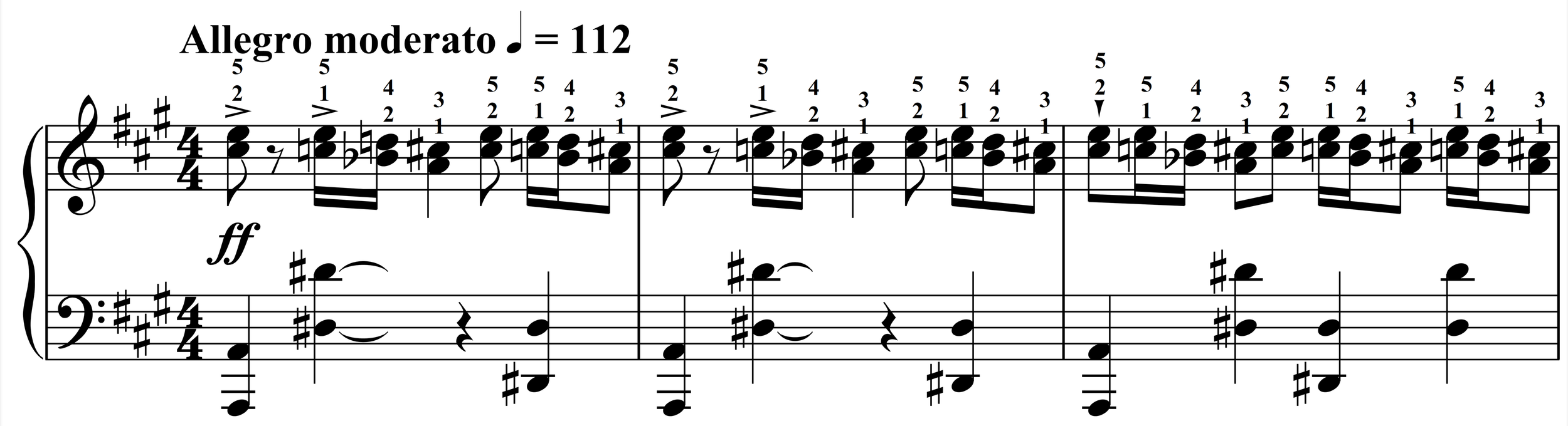
“The most straightforward way to play the double notes would be 5-3 4-2 3-1. However, using 5-1 4-2 3-1 provides better support and power to execute the accents. It also improves the clarity and prevents potential sloppiness.”
Submitted by Jimmy Cheung
Published on 4/27/23

“Splitting up this accompaniment (and the grace notes in particular) between the hands allows an even stronger, more pesante delivery.”
Submitted by Michael Clark with thanks to Jennifer Hayghe
Published on 1/1/2020

“The E-natural fits easily into the left hand and allows a more legato delivery.”
Submitted by Michael Clark
Published on 1/1/2020

Submitted by Josh Condon
Published on 6/13/2020
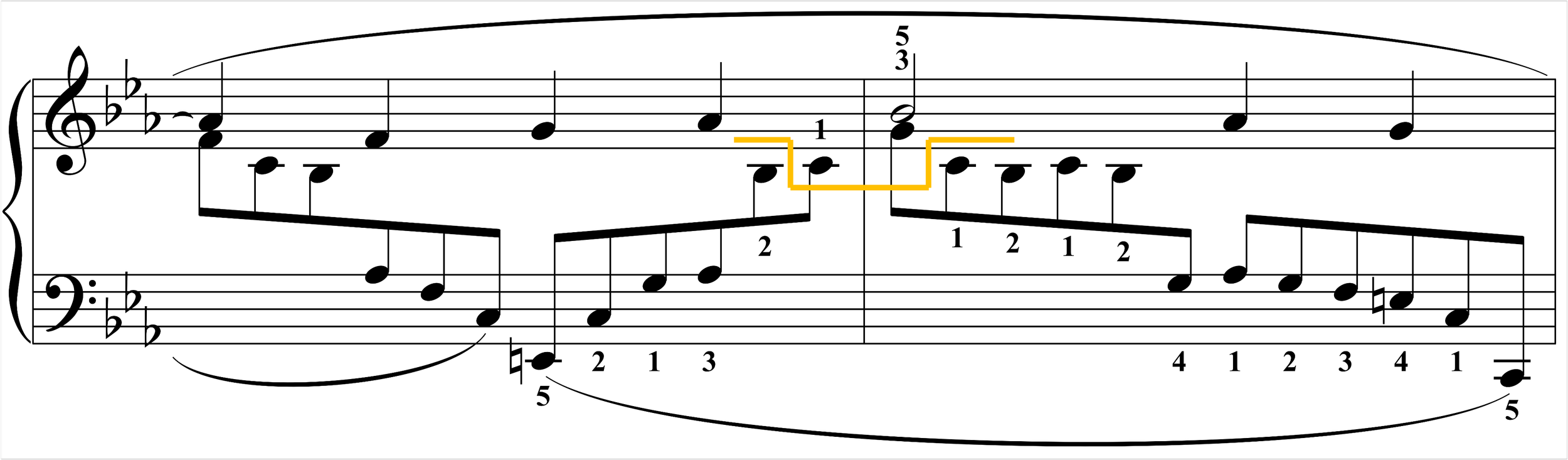
“I have trouble reaching the 3rd measure after rehearsal 3 (m. 57); I find that this distribution helps me to play the melody more clearly.”
Submitted by Alex McDonald
Published on 1/15/2026
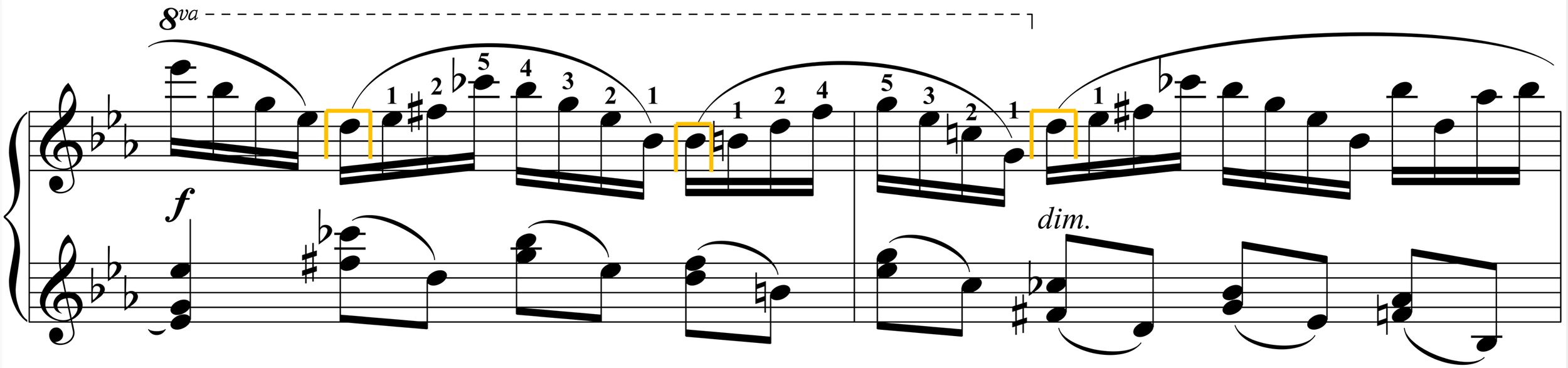
“I find it helpful to move these RH notes into the LH. This helps me achieve better clarity around fingers 3, 4 and 5.”
Submitted by Alex McDonald
Published on 1/15/2026

“The left-hand thumb catches the downbeat of beat 4 every time this figure is played.”
Submitted by Josh Condon
Published on 6/13/2020
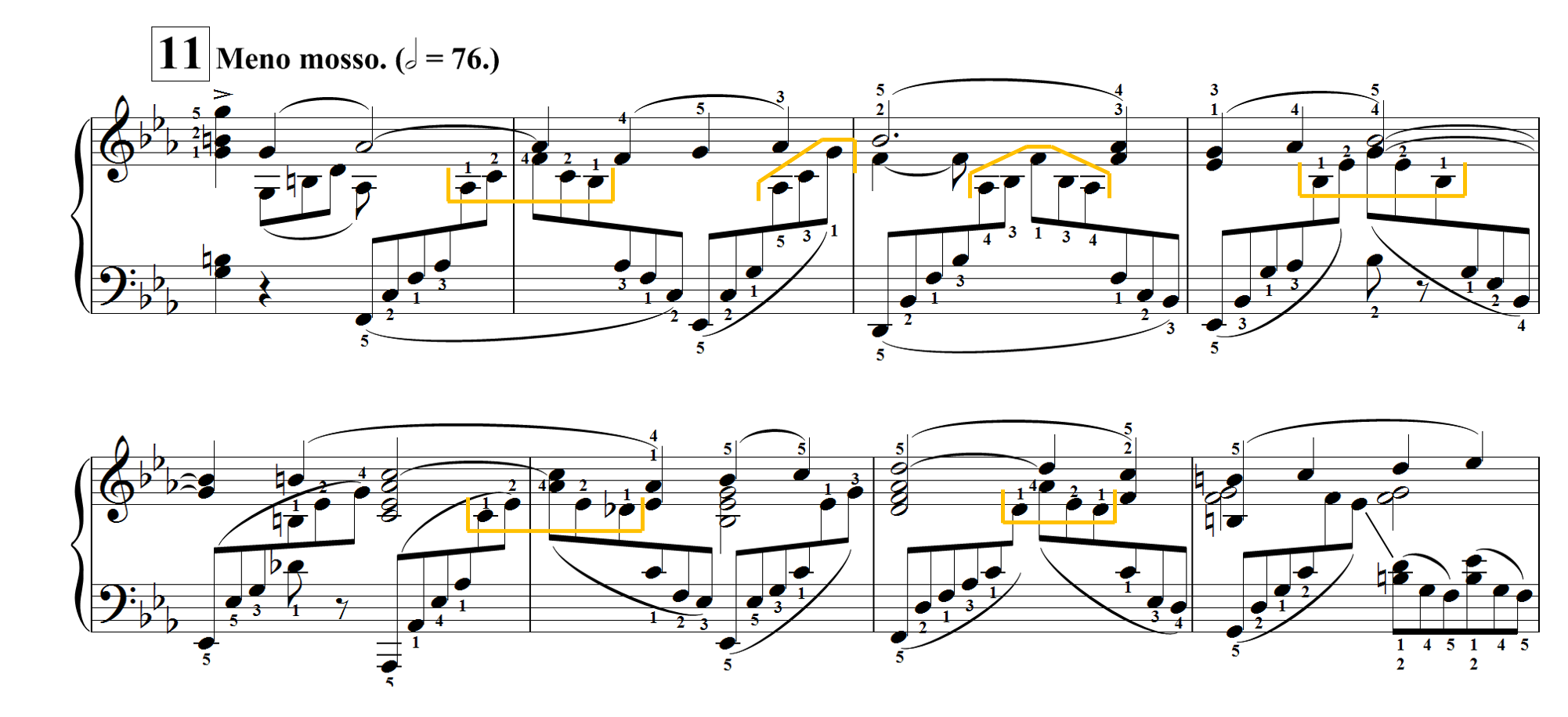
“Unlike the solo tone you want to get at Rehearsal 3 by playing the melody with just one hand and all of the accompaniment in the left, here the harmony forces the right hand to play more and then is in position to play MORE of the accompaniment figures.”
Submitted by Josh Condon
Published on 6/12/2020
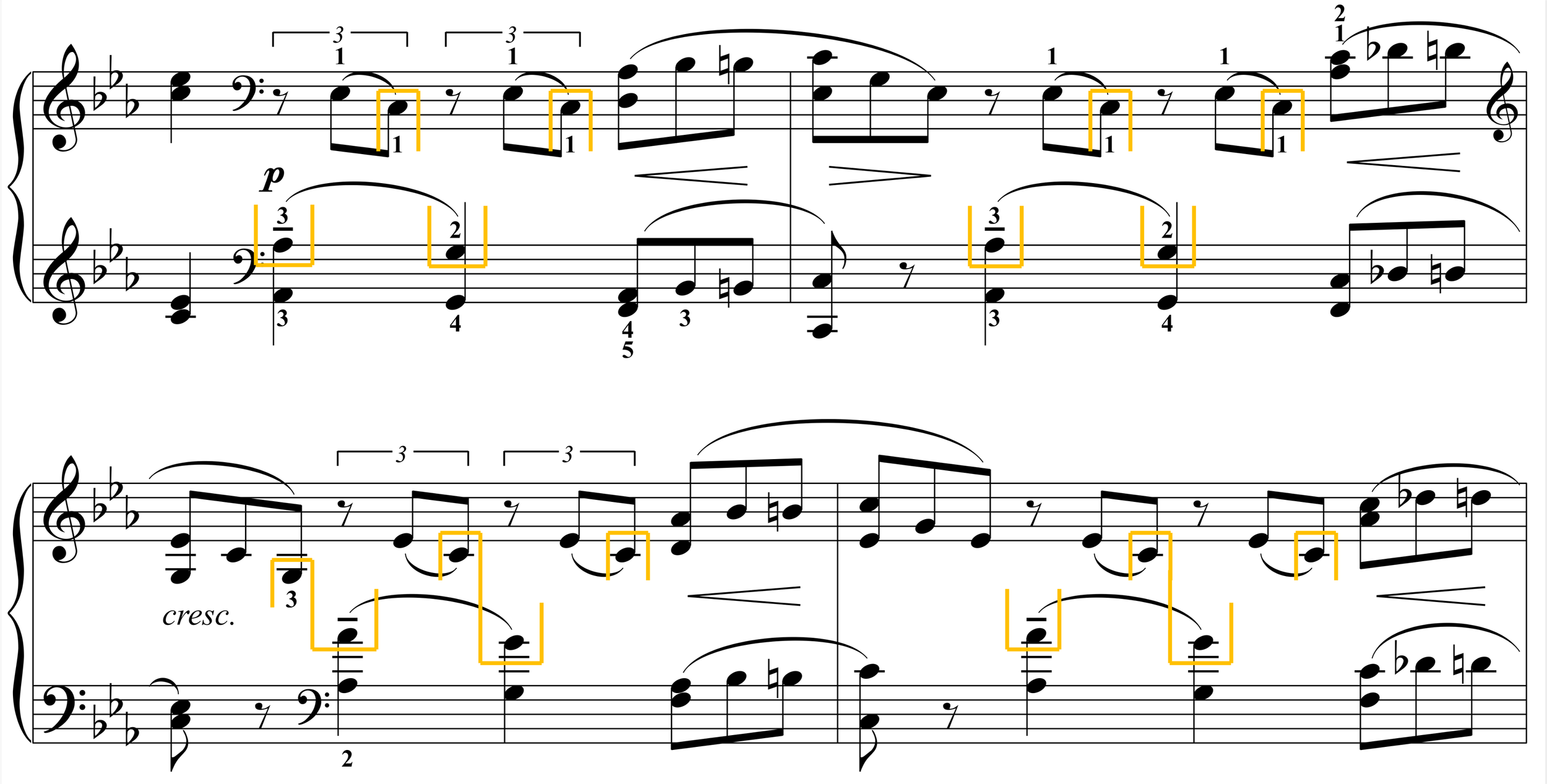
“This distribution is similar to other distributions, but I felt it was helpful to also move some of the RH notes into the LH.”
Submitted by Alex McDonald
Published 1/15/2026

“I catch the top octave in the right hand, and hands are reversed. EXCELLENT because of the awkwardness in the following triplets.”
Submitted by Josh Condon
Published on 6/13/2020

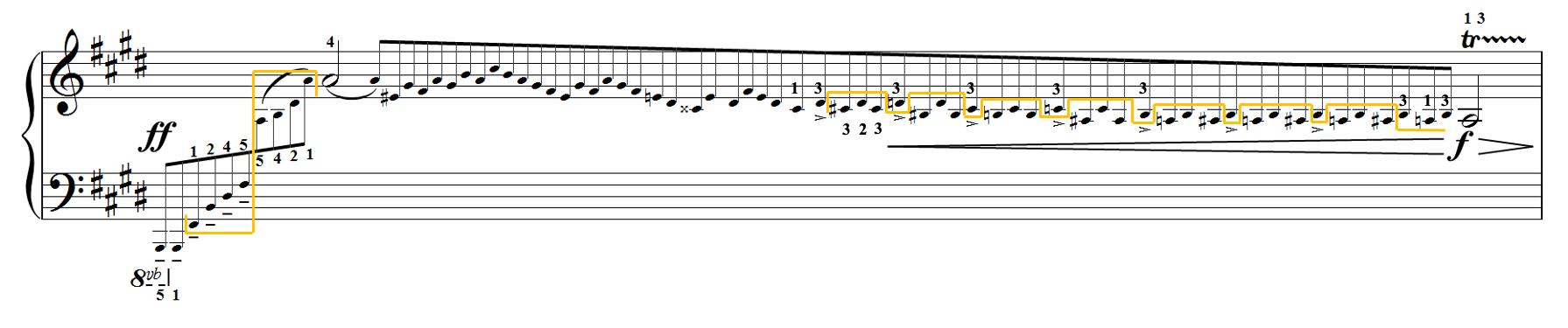
“These excerpt employs an important small left-hand catch in order to keep the strongest fingers playing the fast passage work and avoid a stretch that would have been slightly awkward with my hand size at that very fast tempo.”
Submitted by Josh Condon
Published on 6/7/20
Submitted by Josh Condon
Published on 6/7/2020
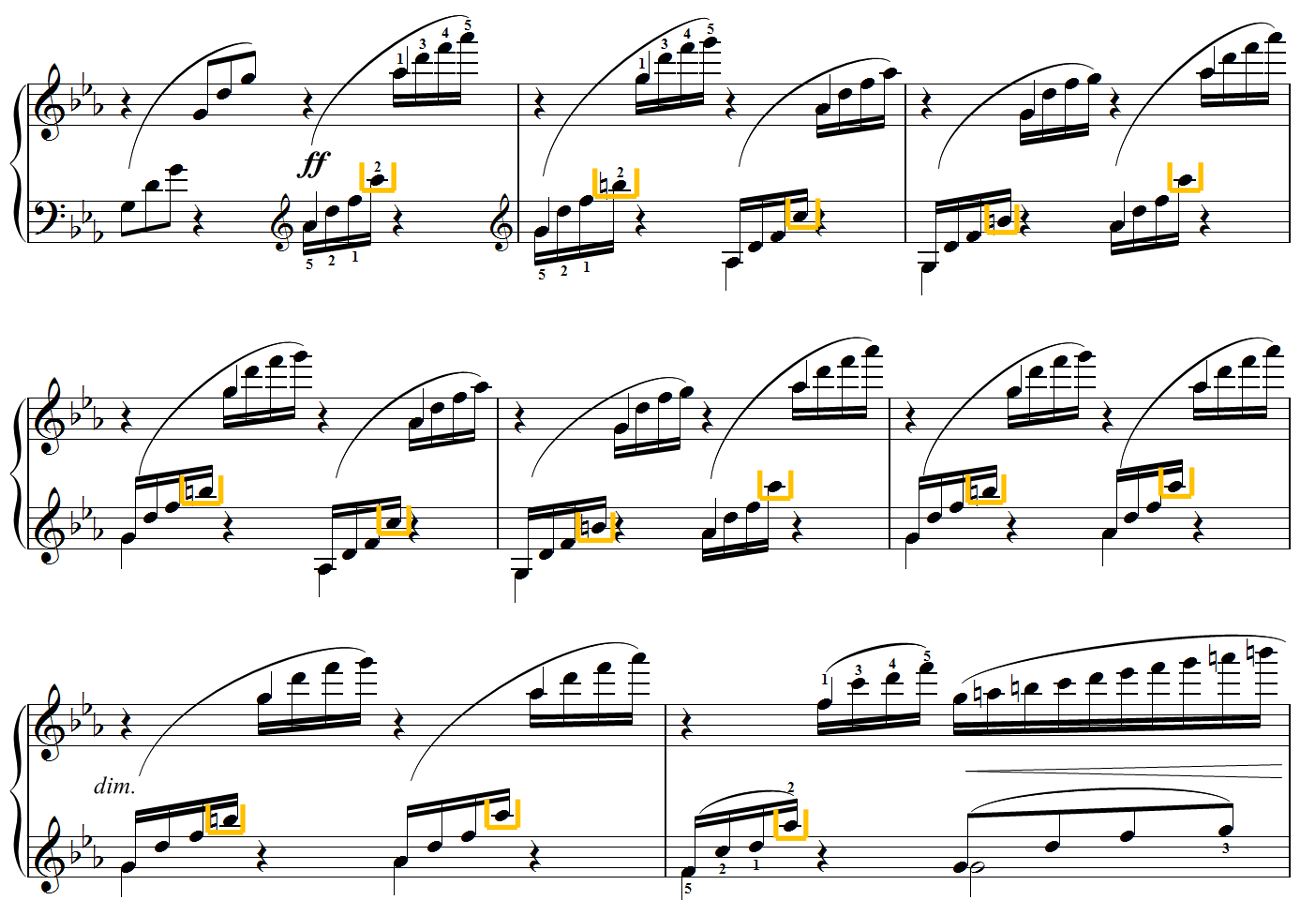
“I couldn’t reach these left-hand groups at lightning speed so my right hand had to catch the final sixteenth notes with 2.”
Submitted by Josh Condon
Published on 6/7/2020

Submitted by Josh Condon
Published on 6/7/2020

“This is an easy change because the right hand is already playing octaves and the left hand has awkward material at this crazy fast tempo.”
Submitted by Josh Condon
Published on 6/7/2020