Submitted by Josh Condon
Published on 6/13/2020


Submitted by Josh Condon
Published on 6/13/2020
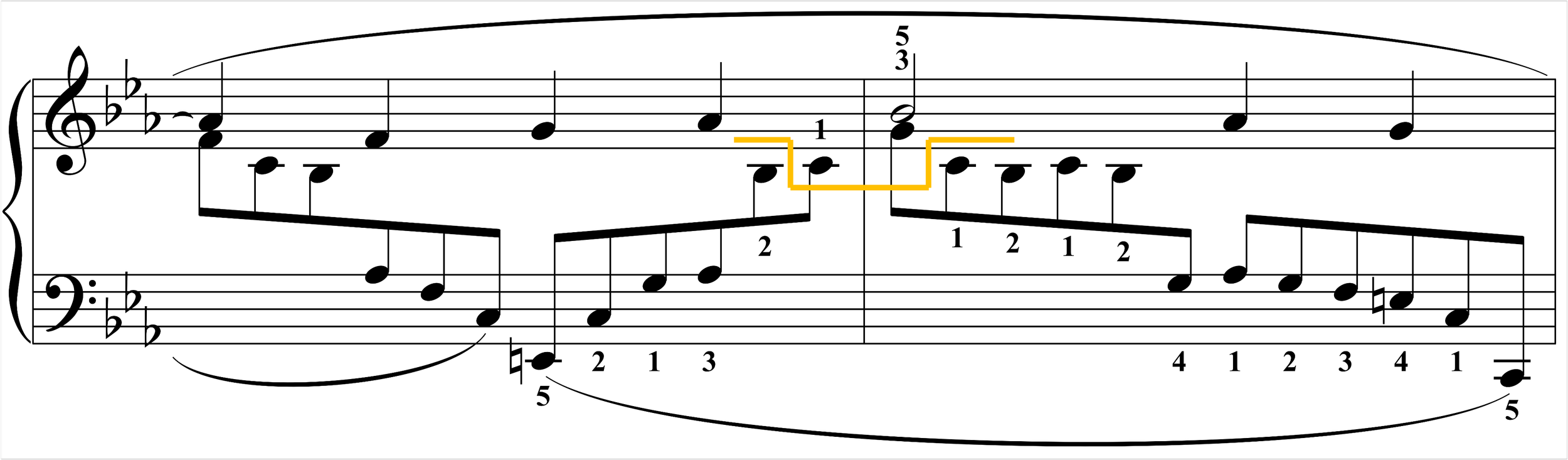
“I have trouble reaching the 3rd measure after rehearsal 3 (m. 57); I find that this distribution helps me to play the melody more clearly.”
Submitted by Alex McDonald
Published on 1/15/2026
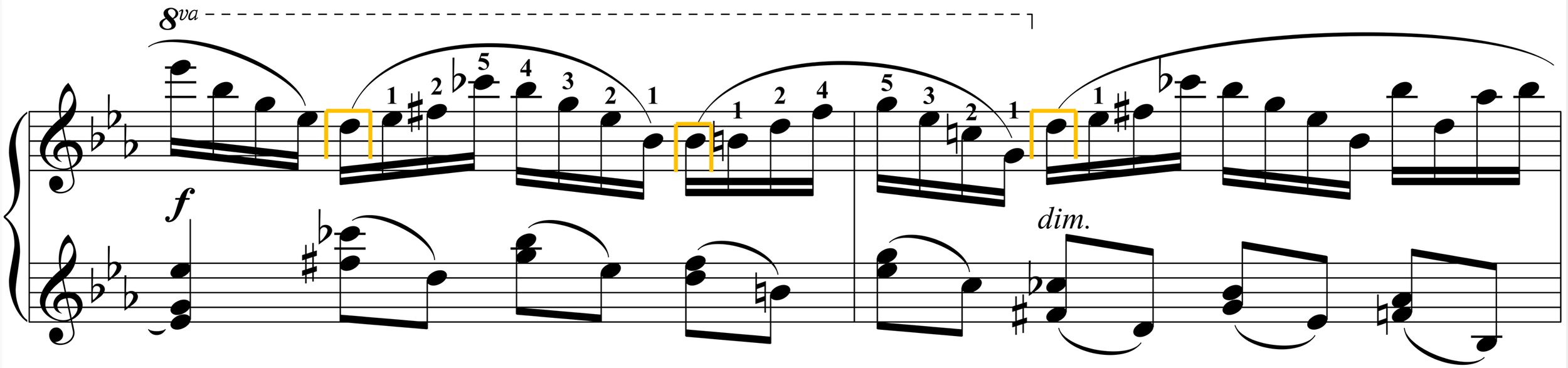
“I find it helpful to move these RH notes into the LH. This helps me achieve better clarity around fingers 3, 4 and 5.”
Submitted by Alex McDonald
Published on 1/15/2026

“The left-hand thumb catches the downbeat of beat 4 every time this figure is played.”
Submitted by Josh Condon
Published on 6/13/2020
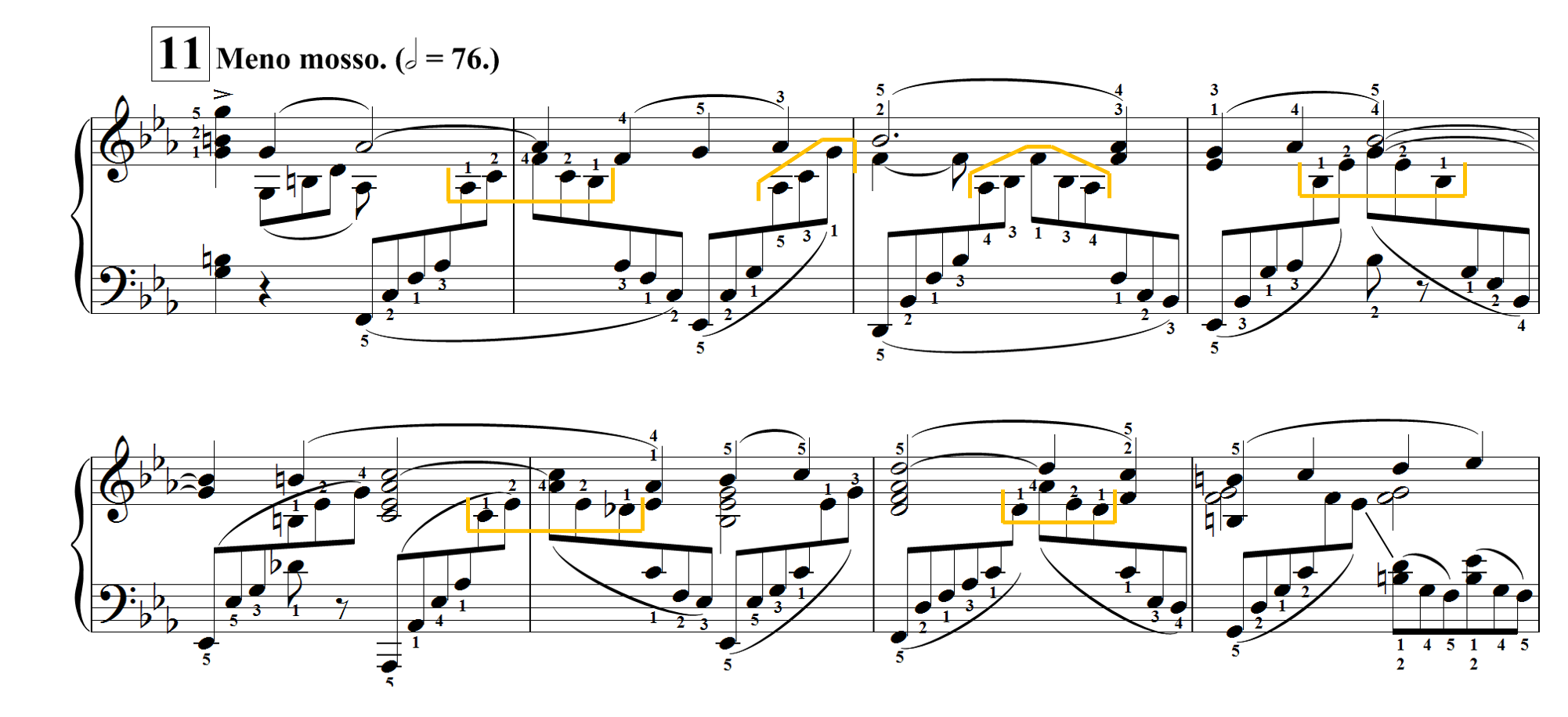
“Unlike the solo tone you want to get at Rehearsal 3 by playing the melody with just one hand and all of the accompaniment in the left, here the harmony forces the right hand to play more and then is in position to play MORE of the accompaniment figures.”
Submitted by Josh Condon
Published on 6/12/2020
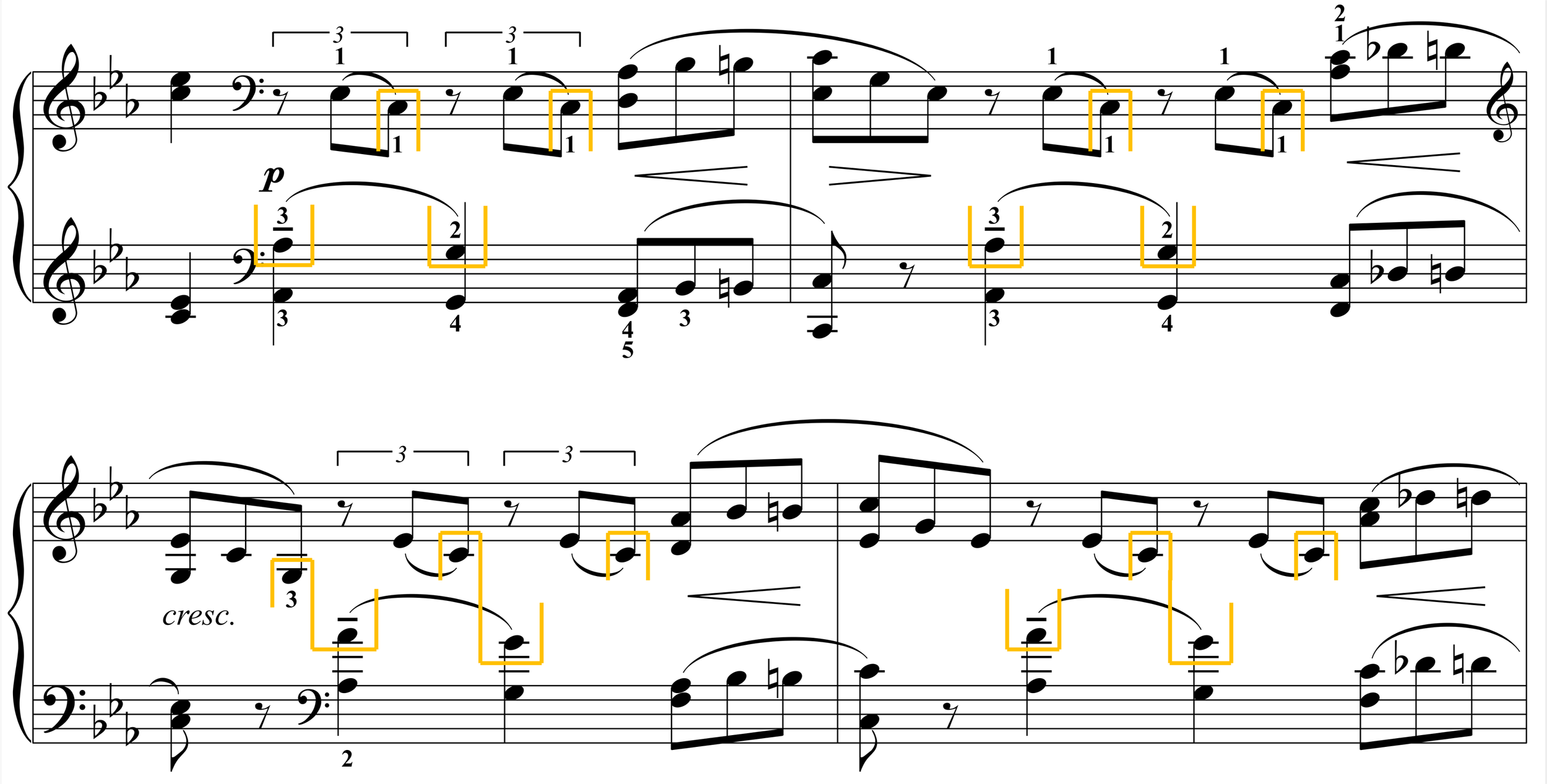
“This distribution is similar to other distributions, but I felt it was helpful to also move some of the RH notes into the LH.”
Submitted by Alex McDonald
Published 1/15/2026

“I catch the top octave in the right hand, and hands are reversed. EXCELLENT because of the awkwardness in the following triplets.”
Submitted by Josh Condon
Published on 6/13/2020

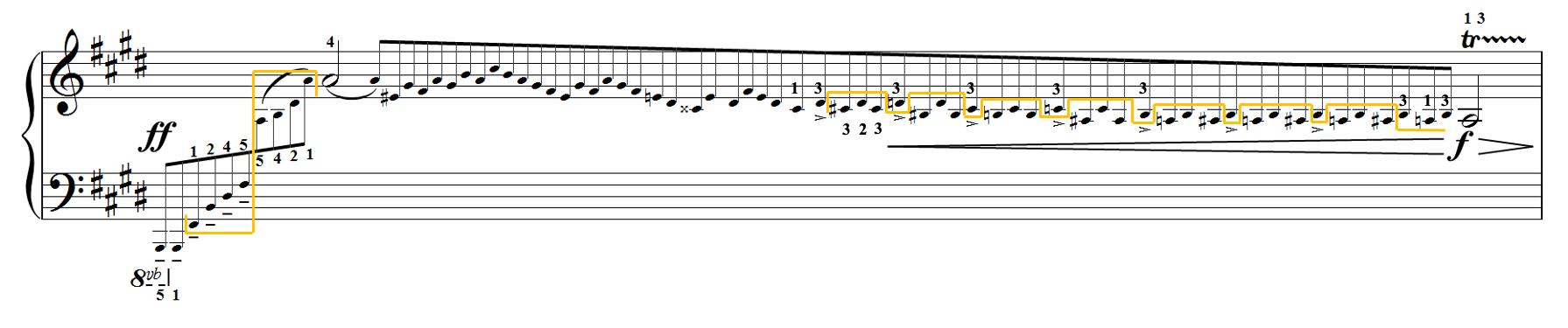
“These excerpt employs an important small left-hand catch in order to keep the strongest fingers playing the fast passage work and avoid a stretch that would have been slightly awkward with my hand size at that very fast tempo.”
Submitted by Josh Condon
Published on 6/7/20
Submitted by Josh Condon
Published on 6/7/2020
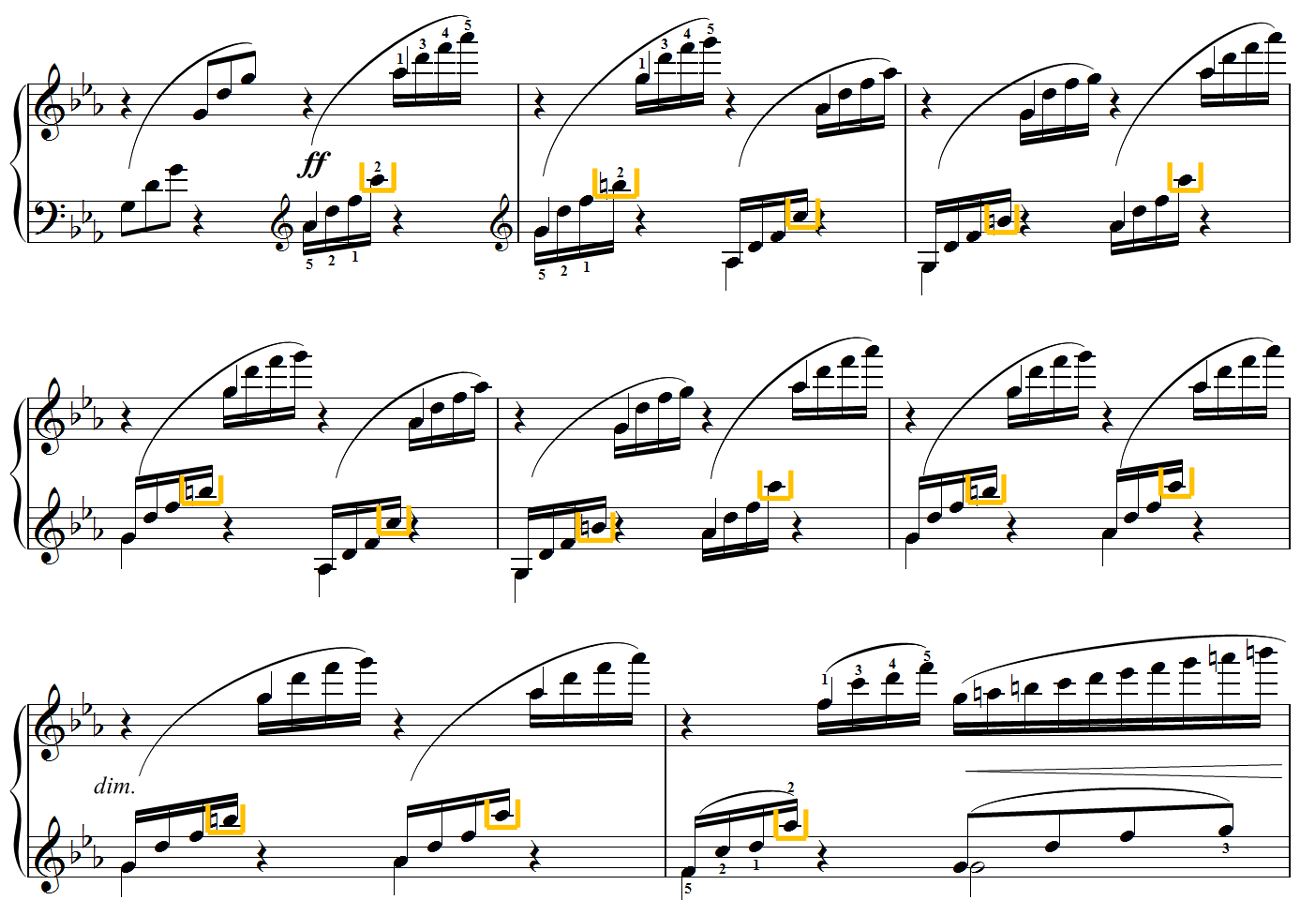
“I couldn’t reach these left-hand groups at lightning speed so my right hand had to catch the final sixteenth notes with 2.”
Submitted by Josh Condon
Published on 6/7/2020

Submitted by Josh Condon
Published on 6/7/2020

“This is an easy change because the right hand is already playing octaves and the left hand has awkward material at this crazy fast tempo.”
Submitted by Josh Condon
Published on 6/7/2020

Submitted by Ben Pawlak
Published on 3/29/2020

“I alternate fingers 4 and 3 in the second measure to prevent kinetic confusion.”
Submitted by Seolyeong Jeong
Published on 8/23/2021

“I start every left-hand fingering group with 1 to prevent confusion.”
Submitted by Seolyeong Jeong
Published on 8/23/2021

“The unusual two-over-thumb (thumb on a black key) secures the upper third (a, c#), especially for people without very large hands or with a short pinky.”
Submitted by Jörg Winter
Published on April 27, 2023

“Playing as written makes the hands crowded. This distribution prevents that.”
Submitted by Michael Lenahan
Published on 6/7/2020

“The fingering Rachmaninoff gives requires tricky double thumbs in the right hand. I find it easier to take those notes in the left hand creating a repeated note in the left hand. The fingering in last measure of this passage removes the awkward ninths in each hand.”
Submitted by Michael Lenahan
Published on 5/25/2020