“This redistribution provides a more graceful conclusion.”
Submitted by Michael Clark
Published on 1/1/2020


“This redistribution provides a more graceful conclusion.”
Submitted by Michael Clark
Published on 1/1/2020

“Starting with a right-hand octave facilitates a left-hand position shift over a smaller interval (D to C-flat). Grabbing the E-flats as a left-hand octave in m. 445 eliminates a fingering cross that I found unreliable.”
Submitted by Michael Clark with thanks to Robert Roux
Published on 4/18/2020

“Taking the E-flat in the right hand allows my left hand to move to its next position earlier.”
Submitted by Michael Clark with thanks to Robert Roux
Published on 8/5/2021

“I find it much more reliable to use the left-hand thumb to start each group of three on the descent.”
Submitted by Michael Clark with thanks to Nancy Weems
Published on 8/5/2021

“Taking some of these As as octaves helps alleviate some of the awkwardness.”
Submitted by Michael Clark
Published on 1/1/2020

“The B-flat major arpeggio is particularly awkward. Taking the top B-flat in the right hand helps a little.”
Submitted by Michael Clark
Published on 1/1/2020

“In this passage I recommend taking only the initial G-flat as an octave.”
Submitted by Michael Clark
Published on 1/1/2020

“I recommend starting the ornament early.”
Submitted by Michael Clark with thanks to Robert Roux
Published on 8/5/2021

“Keeping a relatively consistent pattern of strong fingers in spite of the configuration of black keys simplifies this passage mentally and facilitates a singing sound.”
Submitted by Michael Clark with thanks to Robert Roux
Published on 8/5/2021

“I find using ‘double thumbs’ absolutely essential in this treacherous passage.”
Submitted by Michael Clark with thanks to Robert Roux
Published on 1/1/2020

“This fingering uses fewer hand positions and eliminates a treacherous leap.”
Submitted by Michael Clark with thanks to Robert Roux
Published on 1/1/2020
Original:
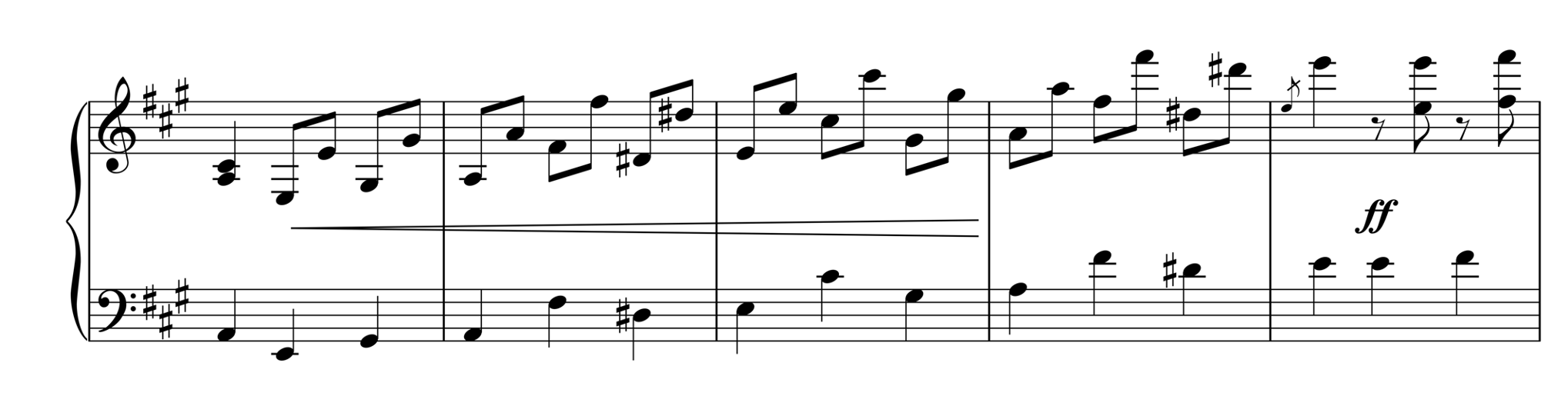
Suggested performance:

“The broken octaves in the right hand can be performed as octaves in the left hand.”
Submitted by Michael Clark
Published on 1/1/2020

“This distribution facilitates the leaps and is more legato.”
Submitted by Michael Clark
Published on 4/18/2020

“This is a no-brainer to lessen the span of the right hand.”
Submitted by Michael Clark
Published on 1/1/2020

“This distribution of notes feels more comfortable in such a high register.”
Submitted by Michael Clark
Published on 1/1/2020

“The lowest notes of the inner voice can be taken with the left hand to facilitate leaps in the right hand.”
Submitted by Michael Clark
Published on 3/15/2020

“Taking some notes of the inner voice with the left hand allows better fingering in the right hand.”
Submitted by Michael Clark
Published on 3/15/2020
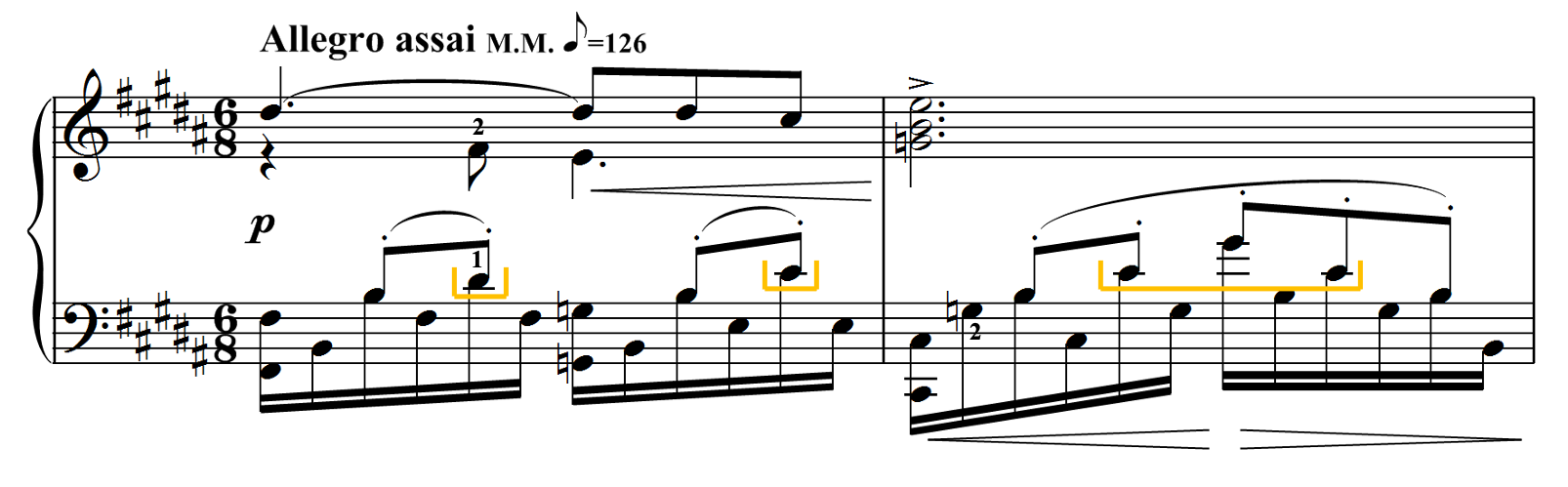
“The left hand often reaches directly into the hand position of the right hand. It’s simpler to have the right hand play these notes.”
Submitted by Michael Clark
Published on 3/15/2020