“These distributions prevent unnecessarily large shifts in position in both hands.”
Submitted by Michael Clark
Published on 3/15/2020


“These distributions prevent unnecessarily large shifts in position in both hands.”
Submitted by Michael Clark
Published on 3/15/2020

“I find this fingering gives me more control over the sound of the various lines.”
Submitted by Michael Clark
Published on 3/15/2020

“Taking some octaves in the right hand lessens the distance of the shifts.”
Submitted by Michael Clark
Published on 3/15/2020

“Taking right hand octaves as indicated reduces the number of position shifts.”
Submitted by Michael Clark
Published on 3/15/2020

“Redistributing as indicated here requires less shifting.”
Submitted by Michael Clark
Published on 3/15/2020

“I like to divide the groups of seven in a consistent pattern.”
Submitted by Michael Clark
Published on 4/13/2020

“Dividing the run this way enables a more secure arrival at the D-sharp octave.”
Submitted by Michael Clark
Published on 4/13/2020

“Taking the low A in the left hand ensures the accuracy of the octave leap.”
Submitted by Michael Clark
Published on 4/13/2020

“The top notes of the left-hand line are already being played by the right hand, so no need for the left hand to shift.
Submitted by Michael Clark
Published on 4/13/2020

“Often the highest notes of the left hand line is already within the right hand’s grasp, so I prefer to let the right hand play them.”
Submitted by Michael Clark
Published on 4/13/2020

“The upper notes of the arpeggios fall directly in the right hand’s position.”
Submitted by Michael Clark
Published on 4/13/2020

“I prefer to take the top of the arpeggio as a triad to avoid crossing again in the left hand.”
Submitted by Michael Clark
Published on 4/13/2020

“The G-sharp is already being played by the right hand—no need to add an extra crossing in the left hand to play it.”
Submitted by Michael Clark
Published on 4/13/2020

“Where possible, I like to take the tops of arpeggios that reach high into the treble staff with the right hand.”
Submitted by Michael Clark
Published on 4/13/2020

“I find it more comfortable to end the right hand with a finger crossing than to start the left hand with one.”
Submitted by Michael Clark
Published on 4/13/2020

“As often happens in Strauss, the left reaches to a note the right hand is already playing. Why not have the right hand play it?”
Submitted by Michael Clark
Published on 4/13/2020
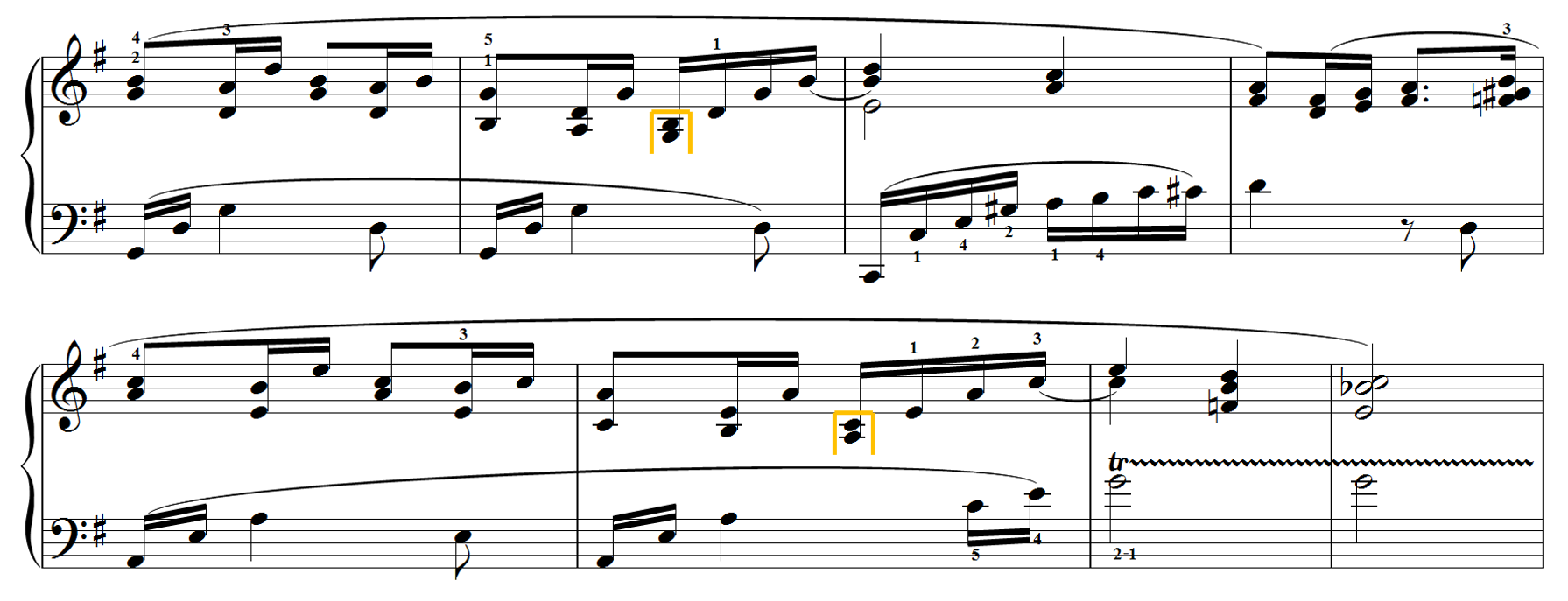
“Taking this dyad in the left hand eliminates position shifts in the right hand.”
Submitted by Michael Clark
Published on 4/13/2020
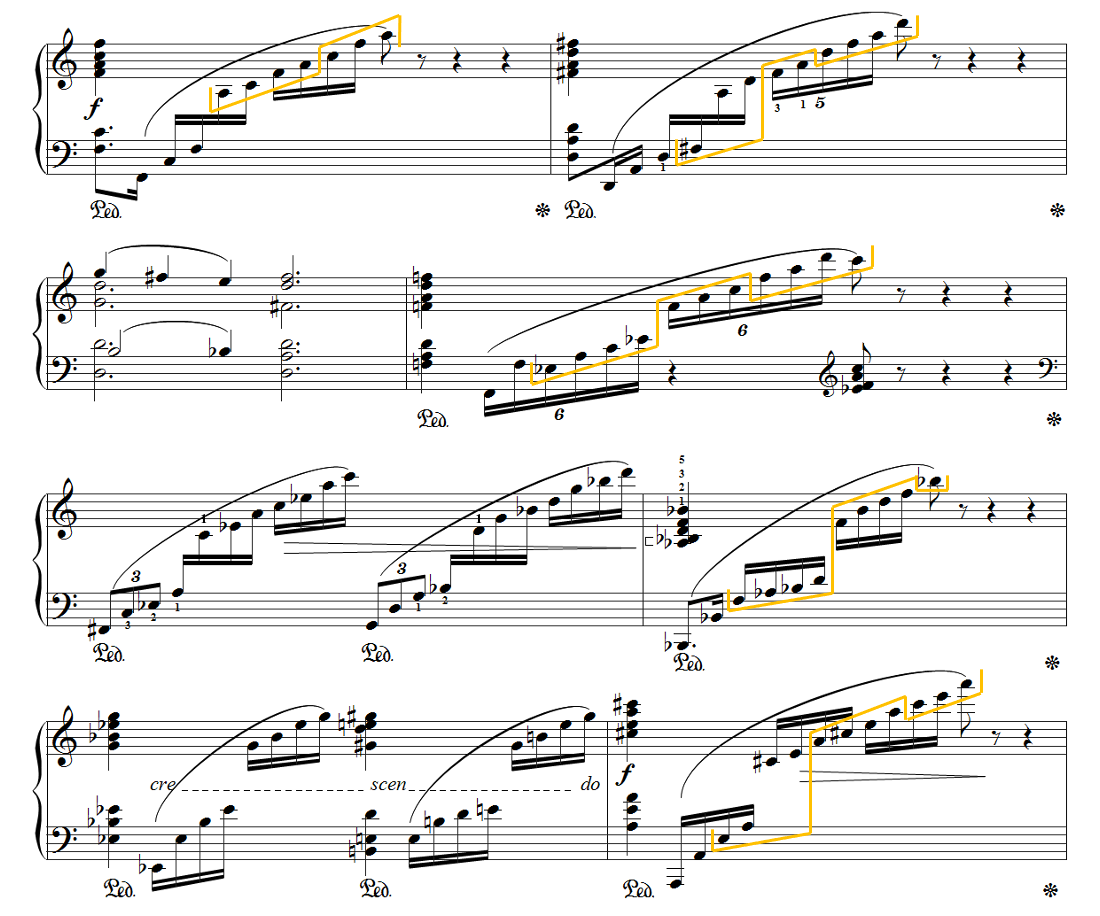
“I find some of these arpeggios more comfortable when taken hand over hand.”
Submitted by Michael Clark
Published on 4/13/2020