Original:
Suggested performance:
“The broken octaves in the right hand can be performed as octaves in the left hand.”
Submitted by Michael Clark
Published on 1/1/2020

Original:
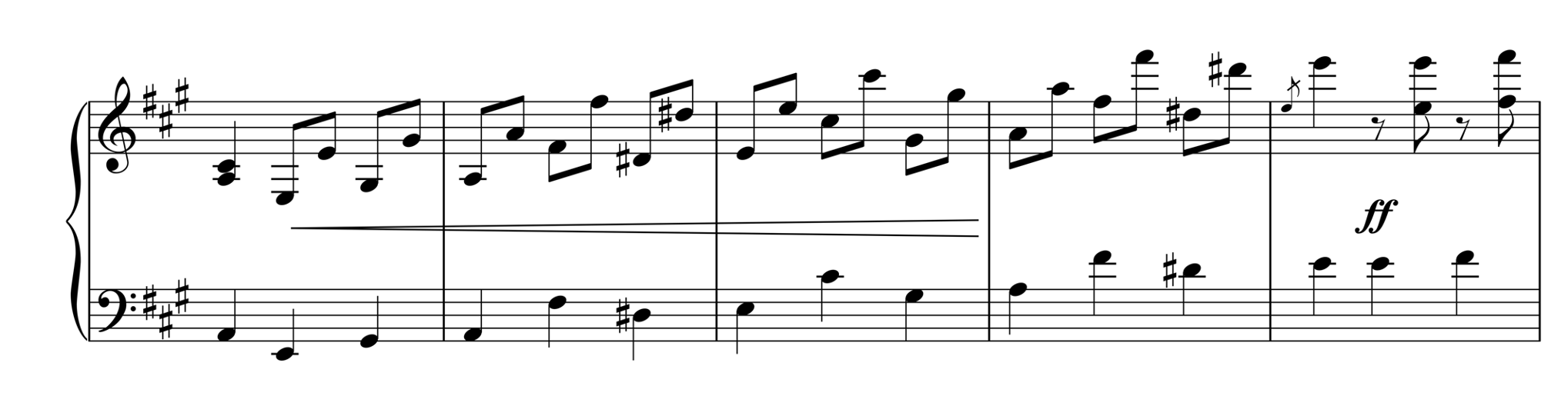
Suggested performance:

“The broken octaves in the right hand can be performed as octaves in the left hand.”
Submitted by Michael Clark
Published on 1/1/2020

“This distribution facilitates the leaps and is more legato.”
Submitted by Michael Clark
Published on 4/18/2020

“This is a no-brainer to lessen the span of the right hand.”
Submitted by Michael Clark
Published on 1/1/2020

“This distribution of notes feels more comfortable in such a high register.”
Submitted by Michael Clark
Published on 1/1/2020

“The lowest notes of the inner voice can be taken with the left hand to facilitate leaps in the right hand.”
Submitted by Michael Clark
Published on 3/15/2020

“Taking some notes of the inner voice with the left hand allows better fingering in the right hand.”
Submitted by Michael Clark
Published on 3/15/2020
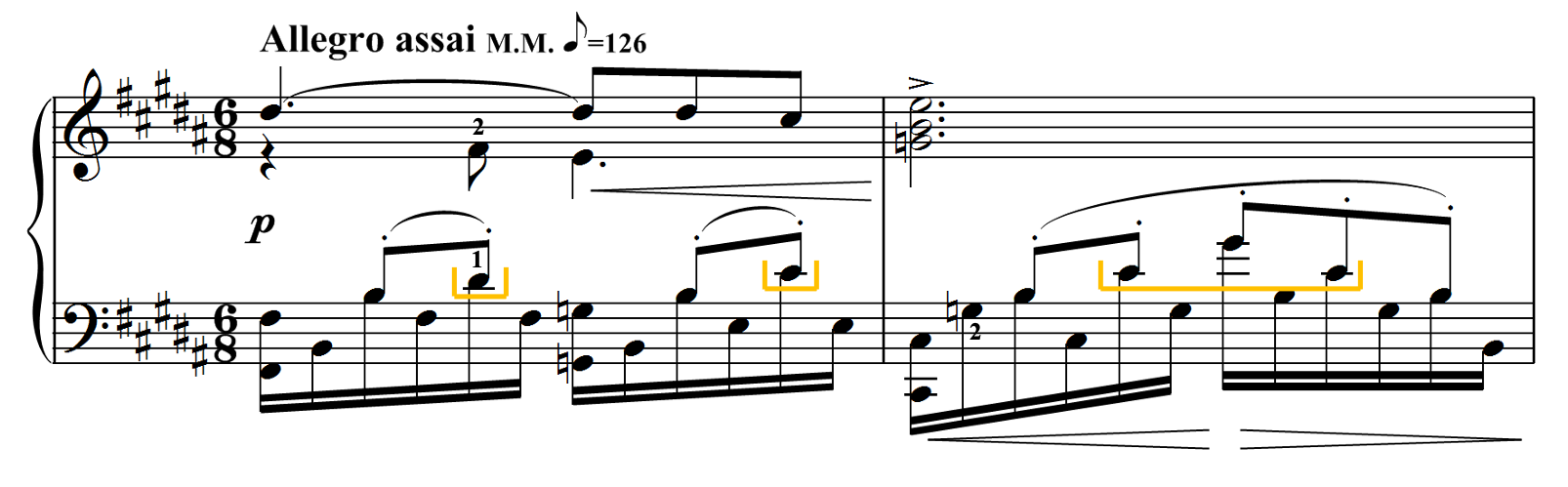
“The left hand often reaches directly into the hand position of the right hand. It’s simpler to have the right hand play these notes.”
Submitted by Michael Clark
Published on 3/15/2020

“These distributions prevent unnecessarily large shifts in position in both hands.”
Submitted by Michael Clark
Published on 3/15/2020

“I find this fingering gives me more control over the sound of the various lines.”
Submitted by Michael Clark
Published on 3/15/2020

“Taking some octaves in the right hand lessens the distance of the shifts.”
Submitted by Michael Clark
Published on 3/15/2020

“Taking right hand octaves as indicated reduces the number of position shifts.”
Submitted by Michael Clark
Published on 3/15/2020

“Redistributing as indicated here requires less shifting.”
Submitted by Michael Clark
Published on 3/15/2020

“I like to divide the groups of seven in a consistent pattern.”
Submitted by Michael Clark
Published on 4/13/2020

“Dividing the run this way enables a more secure arrival at the D-sharp octave.”
Submitted by Michael Clark
Published on 4/13/2020

“Taking the low A in the left hand ensures the accuracy of the octave leap.”
Submitted by Michael Clark
Published on 4/13/2020

“The top notes of the left-hand line are already being played by the right hand, so no need for the left hand to shift.
Submitted by Michael Clark
Published on 4/13/2020

“Often the highest notes of the left hand line is already within the right hand’s grasp, so I prefer to let the right hand play them.”
Submitted by Michael Clark
Published on 4/13/2020

“The upper notes of the arpeggios fall directly in the right hand’s position.”
Submitted by Michael Clark
Published on 4/13/2020