“This fingering allows the bass E to sustain even if the upper voices are played legato.”
Submitted by Michael Clark
Published on 1/27/2020


“This fingering allows the bass E to sustain even if the upper voices are played legato.”
Submitted by Michael Clark
Published on 1/27/2020
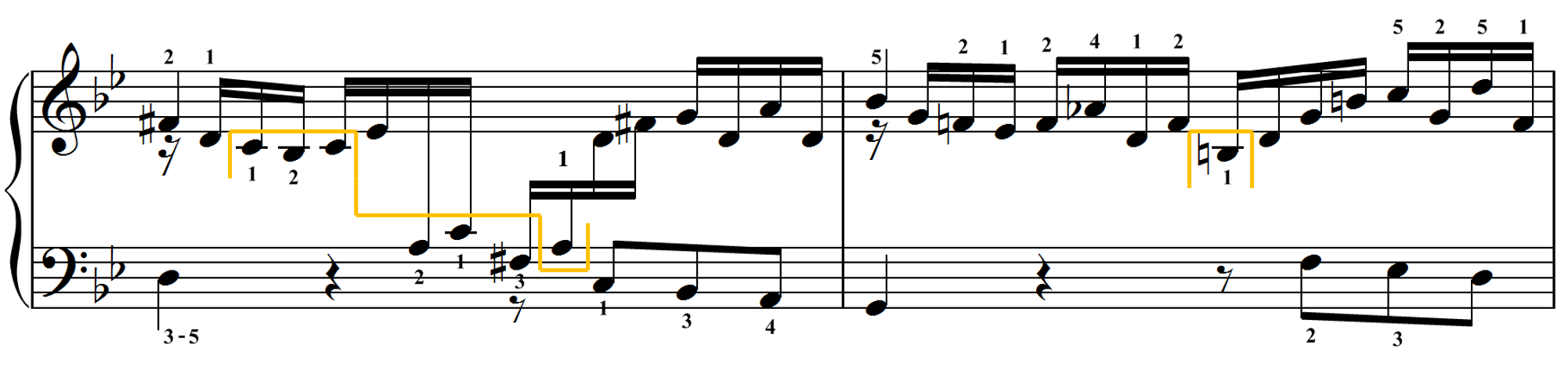
“This redistribution helps the right hand avoid changing positions or crossing over with 2.”
Submitted by Michael Clark
Published on 1/27/2020

“Taking the B-flat in the right hand relieves the left hand from navigating either a leap or a stretch of a sixth into the remaining sixteenth notes, which I find unreliable at quick tempo.”
Submitted by Michael Clark
Published on 1/27/2020
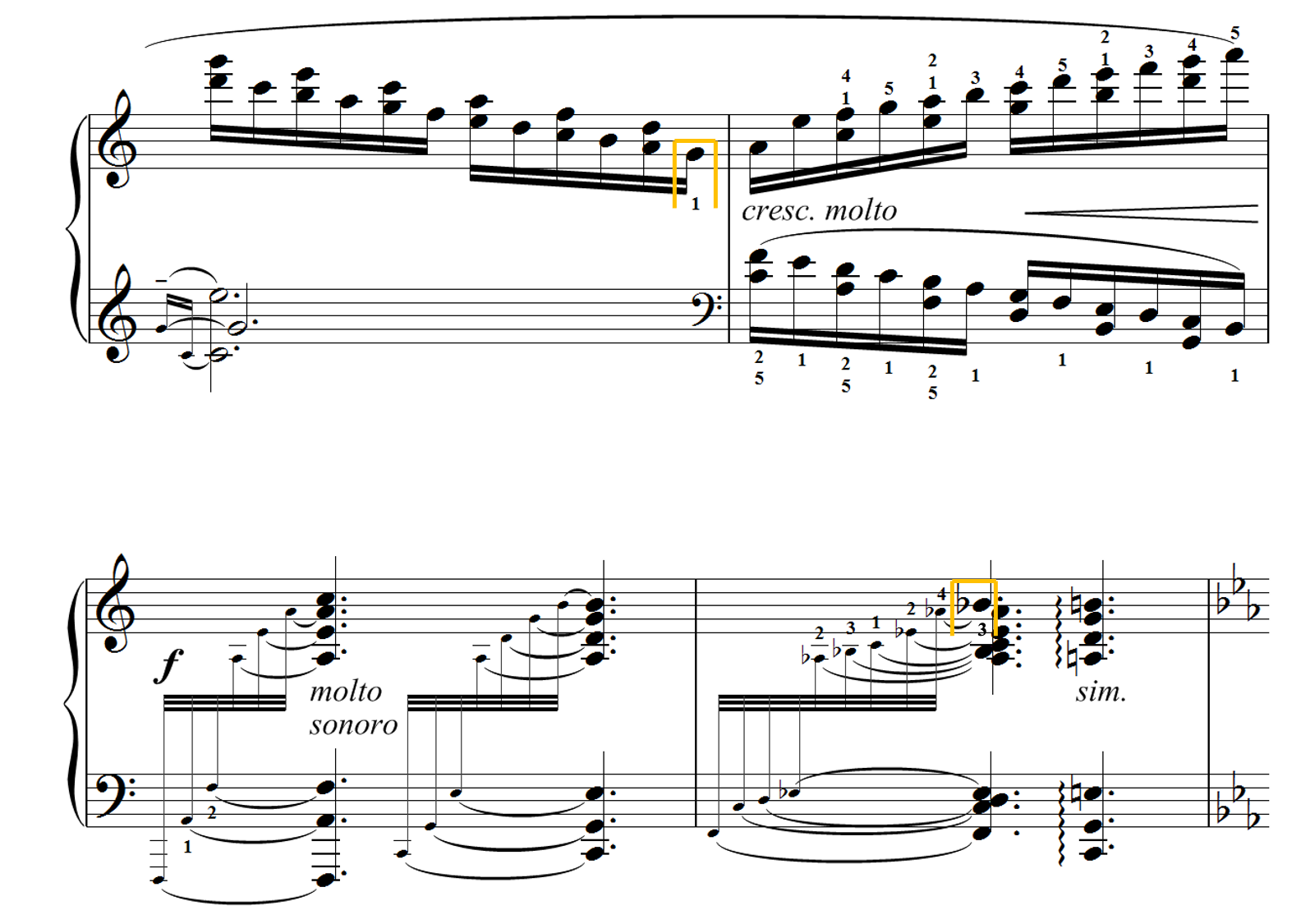
“Switching the sixteenth notes to the left hand one note earlier allows the fingering patterns to flow more naturally in both hands. The suggested fingering for the grace notes in m. 31 uses stronger fingers to achieve the ‘molto sonoro’ forte tone Barber desires.”
Submitted by Michael Clark
Published on 3/18/2020

“Splitting between hands like this allows the rolled notes to played much more fluidly and in a faster motion.”
Submitted by Wade Troyer
Published on 9/1/2023
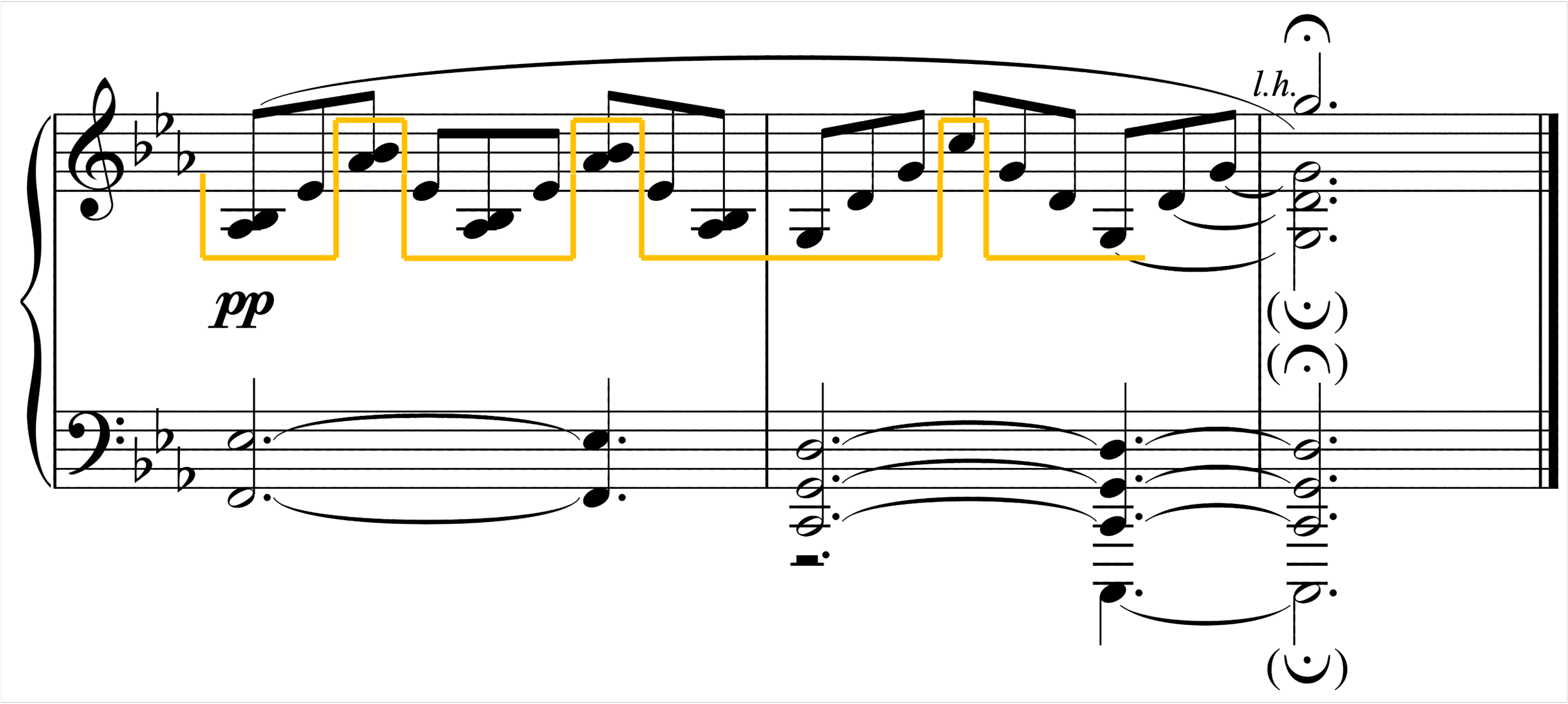
“The hand crossing allows you to play pianissimo much easier than try to playing the 2nds as written with one hand.”
Submitted by Wade Troyer
Published on 9/12/2023

“Switching the C to the left hand allows for a more evenly divided roll and requires the right hand to move less from its previous position.”
Submitted by Michael Clark
Published on 3/18/2020

LH = blue
RH = red
“The redistribution of notes allows the downbeat to played easier in measure 15, though this takes away the ‘struggle’ or forced broadening that Barber intended. That can still come across though with this restructuring.”
Submitted by Wade Troyer
Published on 9/1/2023

“Taking the marked notes in the left hand allows the middle voice to be played legato without stretching.”
Submitted by Michael Clark
Published on 1/1/2020

“Barber’s original note distribution and pedaling prevents the tenor F-flat from connecting to the E-flat. This fingering allows the right-hand thumb to sustain the tenor line. I take an extra pedal change on the final E-flat in the bass staff while keeping all tied notes depressed.”
Submitted by Michael Clark
Published on 1/1/2020

“Taking the last note of the grace-note run in the right hand allows slightly more time for the left hand to move to the following chord an octave lower.”
Submitted by Michael Clark
Published on 2/15/2020

“Playing the top note of the sixths with the right hand eliminates the stretch and allows greater control of the various articulations.”
Submitted by Michael Clark
Published on 1/1/2020
Right hand in red, left hand in blue:


“I find this extremely awkward passage is easier with the hands mostly reversed. The crowding toward the end of the passage is alleviated somewhat by taking the bottom octave of the top staff in the left hand.”
Submitted by Michael Clark with thanks to Nancy Weems
Published on 1/1/2020

“Bartók’s stems suggest alternating hands each measure but this distribution facilitates a more tonally consistent and rhythmic performance.”
Submitted by Michael Clark with thanks to Nancy Weems
Published on 1/1/2020

“This redistribution allows each hand at least one beat of rest to prepare for the next position.”
Submitted by Michael Clark
Published on 1/1/2020

“Eventually the left must play both the sustained bass note and moving quarter note line, but the right hand can help at the start to ensure a clean performances of the grace notes.”
Submitted by Michael Clark
Published on 1/1/2020
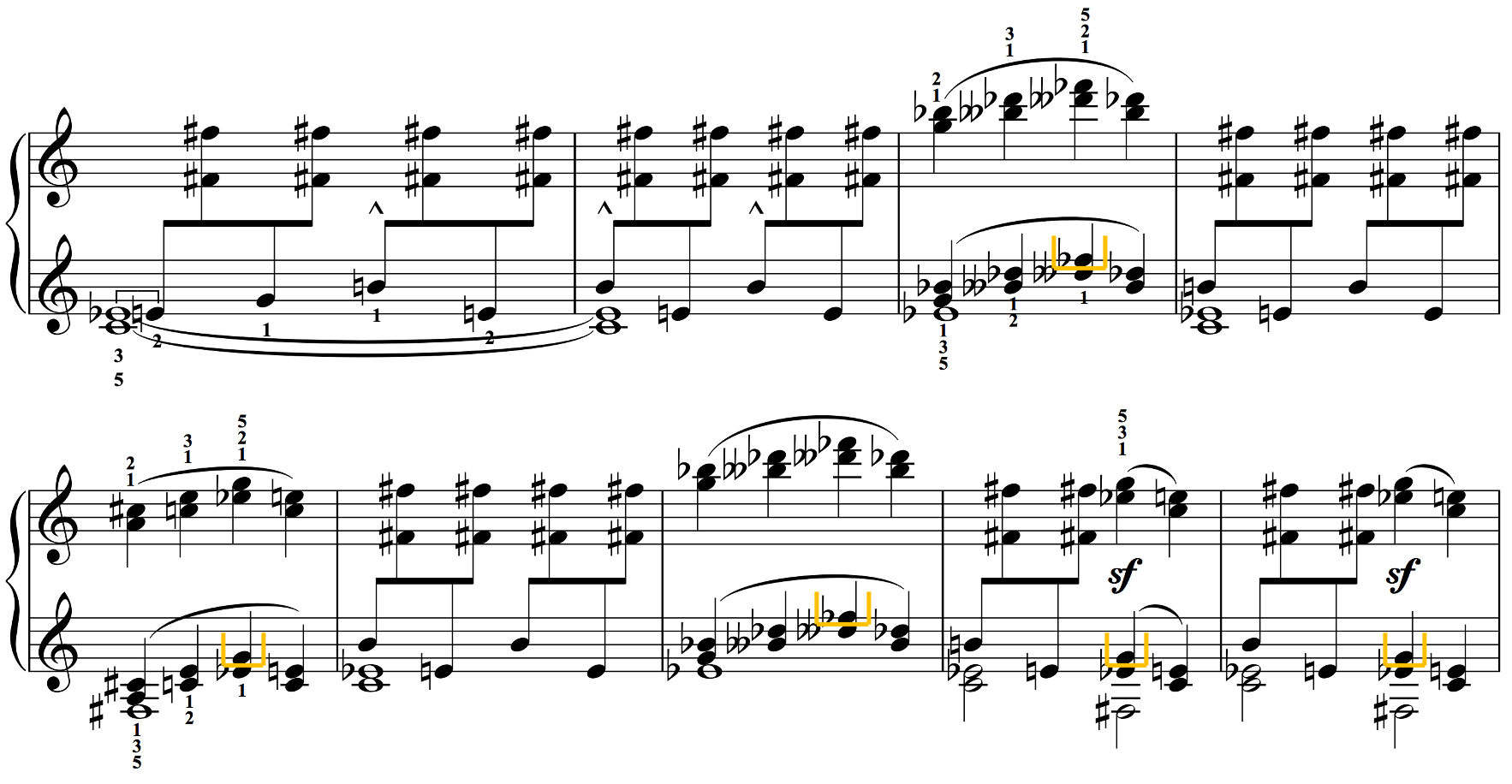
“These redistributions eliminate stretches beyond an octave which are risky at such a fast tempo.”
Submitted by Michael Clark with thanks to Nancy Weems
Published on 1/1/2020

“Using the right to launch this pattern avoids starting with the left-hand crossing over finger 2 which I finding unnecessarily awkward.”
Submitted by Michael Clark
Published on 1/1/2020