“The left is already on the D-flat, so there is no need for the right-hand to shift.”
Submitted by Michael Clark
Published on 3/15/2020


“The left is already on the D-flat, so there is no need for the right-hand to shift.”
Submitted by Michael Clark
Published on 3/15/2020

“Taking the C in the right-hand allows the first chord to be struck simultaneously.”
Submitted by Michael Clark
Published on 3/15/2020
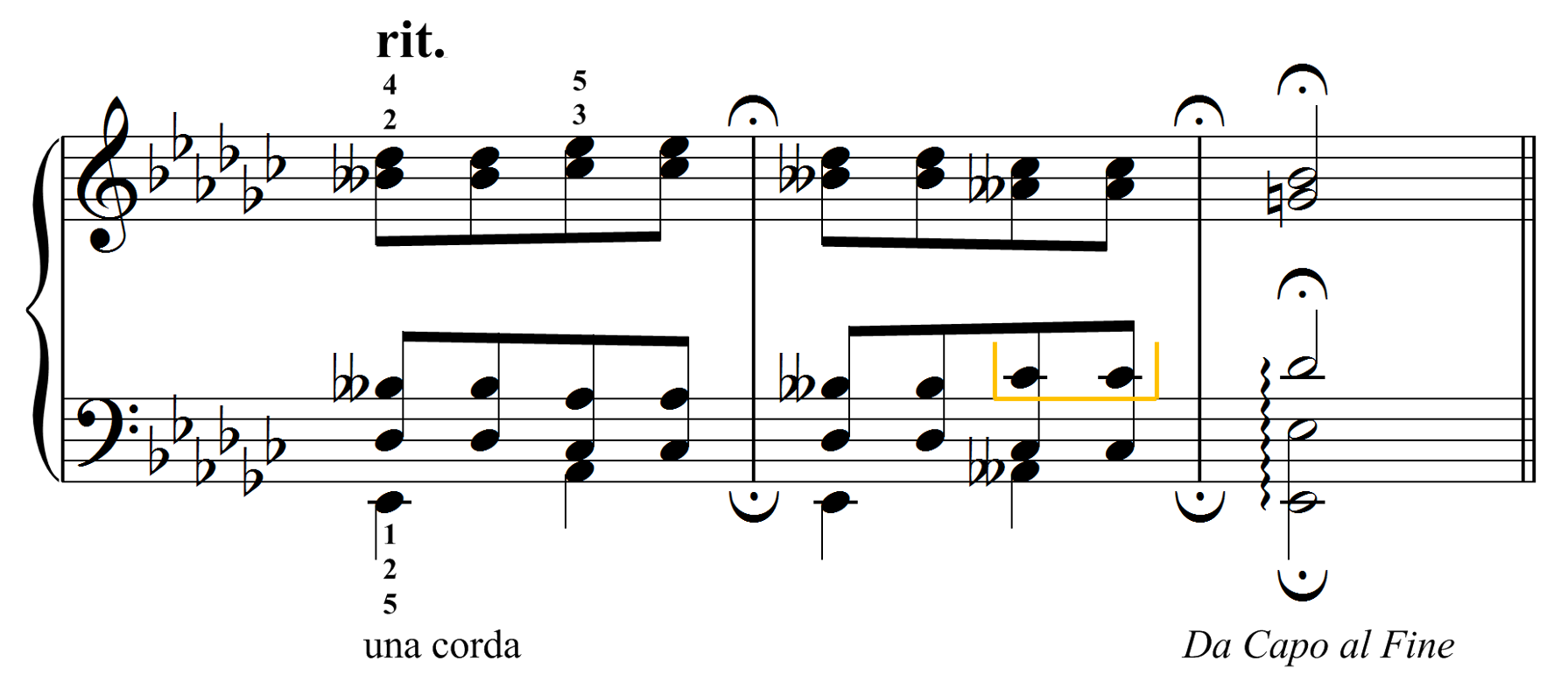
“Taking the E-sharps with the left hand when possible helps differentiate the lines.”
Submitted by Michael Clark
Published on 3/15/2020

“Taking the C-flats in the right hand keeps the reach within an octave.”
Submitted by Michael Clark
Published on 3/15/2020

“Taking the B in the left hand allows each hand to remain in position.”
Submitted by Michael Clark
Published on 3/15/2020

“Taking these notes in the right hand helps differentiate the voices and eliminates the need to stretch or leap to them.”
Submitted by Michael Clark
Published on 3/15/2020

“These notes in the alto line are all within easy reach of the left hand and allow for a more legato performance of the octaves.”
Submitted by Michael Clark
Published on 3/15/2020

“Taking the final F in the right hand makes the leap easier.”
Submitted by Michael Clark
Published on 3/15/2020

“I can articulate these rapid notes more clearly with this redistribution.”
Submitted by Michael Clark
Published on 3/15/2020
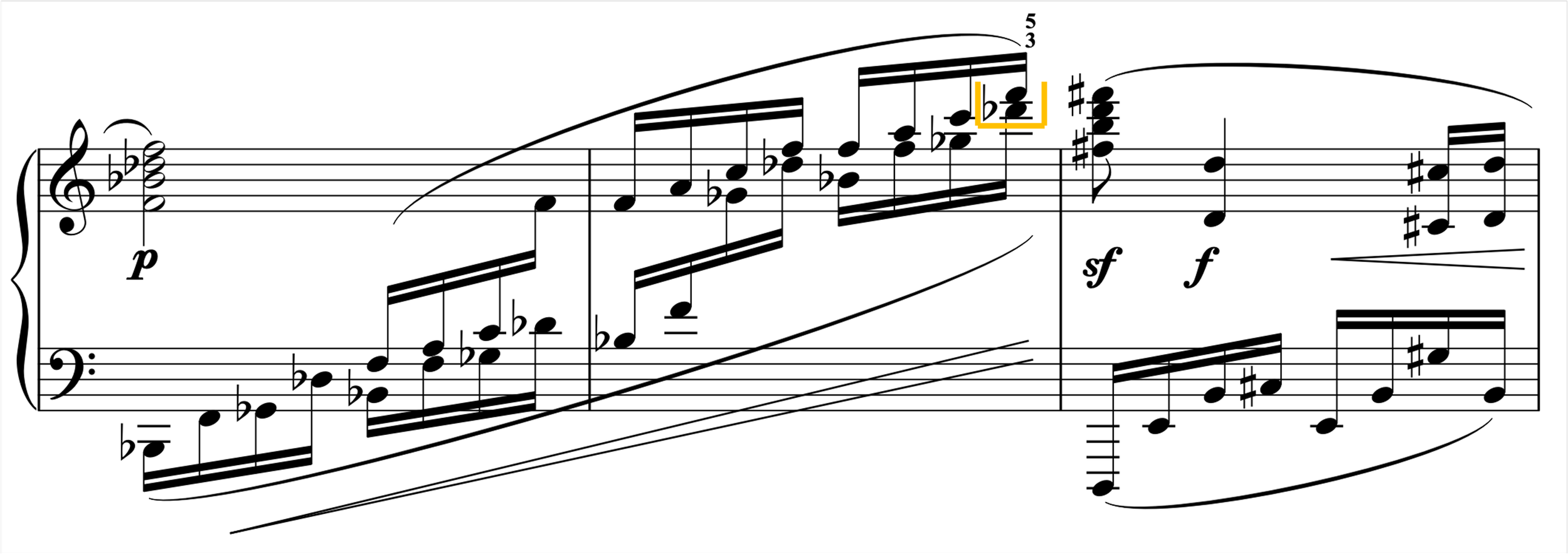
“A redistribution is suggested in m. 19, where the last two notes of the ascending ‘helix’ are taken in the right hand, allowing left hand more time to navigate the leap.”
Submitted by Asher Armstrong
Published on August 22, 2022

“A redistribution is suggested in m. 24, where the last two notes of the ascending ‘helix’ are taken in the right hand, allowing left hand more time to navigate the leap.”
Submitted by Asher Armstrong
Published on August 22, 2022

“The bottom note of the tied octave can be released, allowing the right-hand thumb to take the top note of the left-hand tenth. This helps reduce the number of rolled chords.”
Submitted by Michael Clark with thanks to Jennifer Hayghe
Published on 1/1/2020

“Taking the alto voice in the left hand frees the right to use stronger fingers on the ornamental figure.”
Submitted by Michael Clark with thanks to Jennifer Hayghe
Published on 1/1/2020

“The top note of this especially wide chord can be played with the right hand.”
Submitted by Michael Clark with thanks to Jennifer Hayghe
Published on 1/1/2020

“This tenor melody can be shared between the hands for maximum legato.”
Submitted by Michael Clark with thanks to Craig Nies
Published on 1/1/2020

“This chord involves an awkward layout of black and white keys and is more easily played with the left-hand taking the lowest note.”
Submitted by Michael Clark with thanks to Jennifer Hayghe
Published on 1/1/2020
Fingerings in Italics are Liszt’s.

“I find that this hand distribution on the arpeggio feels good and looks good.”
Submitted by Michael Clark
Published on 1/1/2020

“I like to split some of the octaves between the hands for a more legato effect.”
Submitted by Michael Clark
Published on 1/1/2020