Piano Tricks
Contributors Technical Categories Submit Ideas Search
All Composers Addinsell Albéniz Arditi Argento Bach Barber Bartók Beethoven Ben-Haim Bizet Bonds Boulanger Brahms Carter Chopin Copland Danielpour Debussy Donaudy Fauré Franck Gershwin Ginastera Granados Grieg Hahn Handel Haydn Hopekirk Ives Janáček Kaprávolá Liszt Martinu Mendelssohn Mozart Obradors Poulenc Price Prokofiev Rachmaninoff Ravel Rodrigo Rossini Saint-Saëns Sancan Schubert Schulhoff R. Schumann Scriabin Shostakovich Sisco Strauss Tchaikovsky Tosti Vaughan Williams Vine Weber Wolf
Brandwein's Ravel Fingerings
How It Works Who We Are
Composers All Composers Addinsell Albéniz Arditi Argento Bach Barber Bartók Beethoven Ben-Haim Bizet Bonds Boulanger Brahms Carter Chopin Copland Danielpour Debussy Donaudy Fauré Franck Gershwin Ginastera Granados Grieg Hahn Handel Haydn Hopekirk Ives Janáček Kaprávolá Liszt Martinu Mendelssohn Mozart Obradors Poulenc Price Prokofiev Rachmaninoff Ravel Rodrigo Rossini Saint-Saëns Sancan Schubert Schulhoff R. Schumann Scriabin Shostakovich Sisco Strauss Tchaikovsky Tosti Vaughan Williams Vine Weber Wolf ContributorsTechnical Categories Special Collections Brandwein's Ravel Fingerings Submit Ideas About How It Works Who We Are Search
Piano Tricks
fingerings reimagined
BRAHMS | Sonata in F Minor for Clarinet and Piano, Op. 120, No. 1: III. mm. 7–9
 

“The left hand is leaping anyway, so taking an extra note is not a big deal, and it frees the right up for an alternate fingering that better prepares for the following measure.”

Submitted by Michael Clark

Published on 1/1/2020

 
Chamber MusicMichael ClarkAugust 2, 2019Johannes Brahms, Clarinet Sonata in F Minor (Op. 120/1), Michael Clark, redistribution
BRAHMS | Sonata in F Minor for Clarinet and Piano, Op. 120, No. 1: III. 43–44
 
Piano fingerings for Sonata for Clarinet and Piano in F Minor, Op. 120, No. 1, by Johannes Brahms

“The bottom notes of the treble staff naturally fall into left hand territory, facilitating an easier legato.”

Submitted by Michael Clark

Published on 1/1/2020

 
Chamber MusicMichael ClarkAugust 2, 2019Johannes Brahms, Clarinet Sonata in F Minor (Op. 120/1), Michael Clark, redistribution, improve legato
BRAHMS | Sonata in F Minor for Clarinet and Piano, Op. 120, No. 1: IV. 15–16
 

“I find it easier to take the last notes of these wide arpeggios in the right hand.”

Submitted by Michael Clark

Published on 1/1/2020

 
Chamber MusicMichael ClarkAugust 2, 2019Johannes Brahms, Clarinet Sonata in F Minor (Op. 120/1), Michael Clark, redistribution, wide arpeggio, avoid finger crossing
BRAHMS | Sonata in F Minor for Clarinet and Piano, Op. 120, No. 1: IV. 29–30
 
Piano fingerings for Sonata for Clarinet and Piano in F Minor, Op. 120, No. 1, by Johannes Brahms

“The D falls easily into the right hand, allowing the left hand to be better positioned for the following measure.”

Submitted by Michael Clark

Published on 1/1/2020

 
Chamber MusicMichael ClarkAugust 2, 2019Johannes Brahms, Clarinet Sonata in F Minor (Op. 120/1), Michael Clark, redistribution
BRAHMS | Sonata in F Minor for Clarinet and Piano, Op. 120, No. 1: IV. 69–70
 
Piano fingerings for Sonata for Clarinet and Piano in F Minor, Op. 120, No. 1, by Johannes Brahms

“Grabbing the G in the left hand eliminates a dangerous leap in the right hand, replacing it with a much more manageable shift in the left hand.”

Submitted by Michael Clark

Published on 1/1/2020

 
Chamber MusicMichael ClarkAugust 2, 2019Johannes Brahms, Clarinet Sonata in F Minor (Op. 120/1), Michael Clark, reduce position shifts, redistribution
BRAHMS | Sonata in E-flat Major for Clarinet and Piano, Op. 120, No. 2: I. mm. 15–16
 
Piano fingerings for Clarinet Sonata in E-flat Major, Op. 120, No. 2, by Johannes Brahms

Submitted by Christian McGee

Published on 1/27/2020

 
Chamber MusicMichael ClarkAugust 1, 2019Johannes Brahms, Clarinet Sonata in E-flat Major (Op. 120/2), Christian McGee, facilitate leap, split octaves, redistributionComment
BRAHMS | Sonata in E-flat Major for Clarinet and Piano, Op. 120, No. 2: I. mm. 15–16
 
Piano fingerings for Clarinet Sonata in E-flat Major, Op. 120, No. 2, by Johannes Brahms

Submitted by Christian McGee

Published on 1/27/2020

 
Chamber MusicMichael ClarkAugust 1, 2019Johannes Brahms, Clarinet Sonata in E-flat Major (Op. 120/2), Christian McGee, facilitate leap, split octaves, redistributionComment
CARTER | Three Poems of Robert Frost: II. The Rose Family: mm. 31–33
 
Piano fingerings for Three Poems of Robert Frost (The Rose Family) by Elliott Carter

“The right hand is already on this C at the end of the previous measure, and playing it again with the right hand breaks up the left hand into two more manageable positions.”

Submitted by Michael Clark

Published on 3/17/2020

 
Art SongMichael ClarkJuly 15, 2019Elliott Carter, Three Poems of Robert Frost, Michael Clark, wide accompaniment pattern, redistributionComment
CHOPIN | Prelude in G Major, Op. 28, No. 3: m. 7
 

Submitted by John Kline with thanks to Vladimir Ashkenazy

Published on 2/29/2020

 
Solo PianoMichael ClarkJune 17, 2019Frédéric Chopin, Preludes (Op. 28), John Kline, awkward passagework, redistributionComment
CHOPIN | Fantasy in F Minor, Op. 49: mm. 43–46
 

“Silently transferring the top note of the fifth into the left hand allows it to be held for its full duration.”

Submitted by Michael Clark

Published on 1/1/2020

 
Solo PianoMichael ClarkJune 7, 2019Frédéric Chopin, Fantasy in F Minor (Op. 49), Michael Clark, redistribution, facilitate tie, Silent hand transfer
CHOPIN | Fantasy in F Minor, Op. 49: mm. 50–53
 
Piano fingerings for Fantasy in F Minor, Op. 49, by Frédéric Chopin

“Taking the F in the right hand facilitates a finger substitution on the A-flat, making it possible to sustain it for its full value.”

Submitted by Michael Clark

Published on 1/1/2020
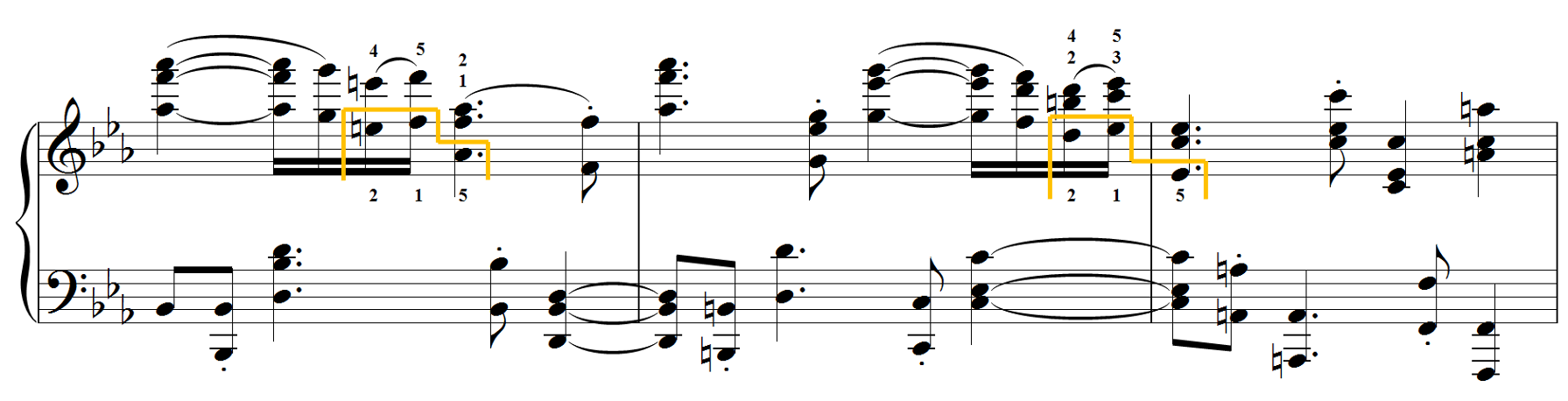
 
Michael ClarkJune 7, 2019Frédéric Chopin, Fantasy in F Minor (Op. 49), Michael Clark, facilitate tie, redistribution
CHOPIN | Fantasy in F Minor, Op. 49: mm. 87–89
 
Piano fingerings for Fantasy in F Minor, Op. 49, by Frédéric Chopin

“The left hand is already in a higher register. Why not help out the right hand?”

Submitted by Michael Clark

Published on 1/1/2020

 
Solo PianoMichael ClarkJune 7, 2019Frédéric Chopin, Fantasy in F Minor (Op. 49), arpeggios, Michael Clark, redistribution
CHOPIN | Fantasy in F Minor, Op. 49: mm. 150–52
 
Piano fingerings for Fantasy in F Minor, Op. 49, by Frédéric Chopin

“I find using two hands is more reliable and looks good.”

Submitted by Michael Clark

Published on 1/1/2020

 
Solo PianoMichael ClarkJune 7, 2019Frédéric Chopin, Fantasy in F Minor (Op. 49), arpeggios, Michael Clark, redistribution
CHOPIN | Ballade No. 4 in F Minor, Op. 52: mm. 223–24
 
Piano fingerings for Ballade No. 4 in F Minor by Frédéric Chopin

“Repeat provided fingering patterns through the measure.”

Submitted by Kevin Lee Sun

Published on 1/28/2022

 
Solo PianoMichael ClarkJune 6, 2019Frédéric Chopin, Ballade No. 4 in F Minor, Kevin Lee Sun, redistribution, double notes, Share Middle Voice Between HandsComment
CHOPIN | Nocturne in E Major, Op. 62, No. 2: mm. 23–24
 
Piano fingerings for Nocturne in E Major, Op. 62, No. 2, by Frédéric Chopin

“Take these two note notes with left hand is a secure way to end the trill and make the leap.”

Submitted by Michael Clark

Published on 1/1/2020

 
Solo PianoMichael ClarkJune 4, 2019Frédéric Chopin, Nocturne (Op. 62/2), Michael Clark, trill, redistribution, facilitate leap
CHOPIN | Nocturne in E Major, Op. 62, No. 2: mm. 78–79
 
Piano fingerings for Nocturne in E Major, Op. 62, No. 2, by Frédéric Chopin

“Taking the double-stemmed note in the left hand helps to voice it distinctly from the other notes in the arpeggio.”

Submitted by Michael Clark

Published on 1/1/2020
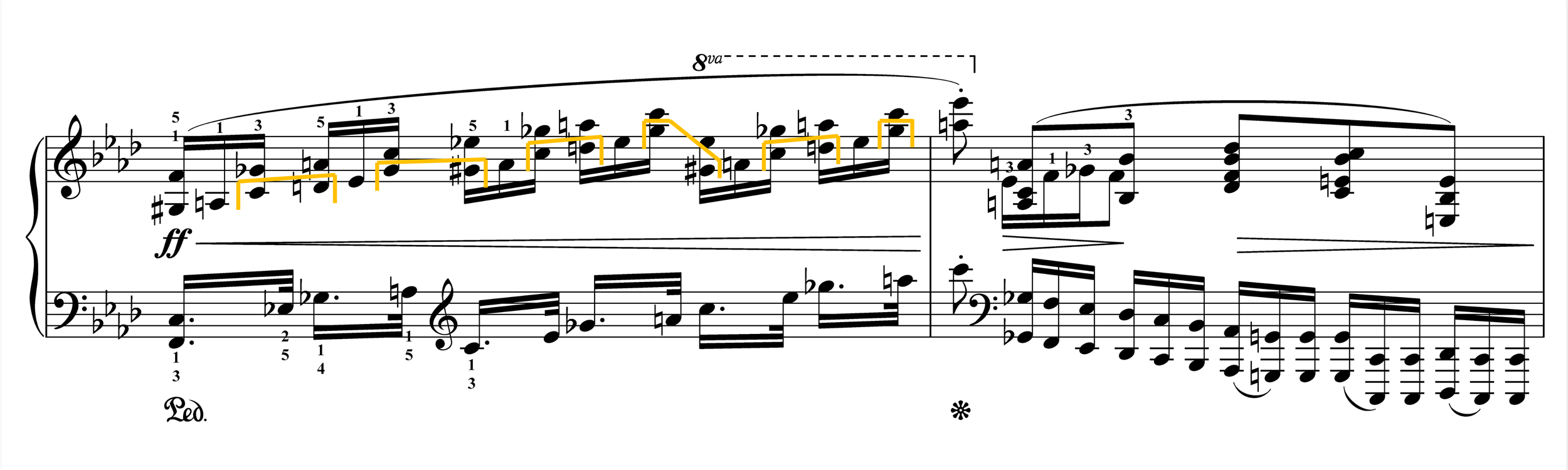
 
Solo PianoMichael ClarkJune 4, 2019Frédéric Chopin, Nocturne (Op. 62/2), Michael Clark, hand crossing, redistribution, improve voicing
CHOPIN | Sonata for Cello and Piano in G Minor, Op. 65: I. mm. 16–17
 

“I find it easier to begin with an octave in the right hand.”

Submitted by Michael Clark

Published on 1/1/2020

 
Chamber MusicMichael ClarkJune 2, 2019Frédéric Chopin, Cello Sonata (Op. 65), Michael Clark, initial octave, redistribution
CHOPIN | Sonata for Cello and Piano in G Minor, Op. 65: I. mm. 107–8
 

“These redistributions favor compact hand positions and minimal position shifts to maximize efficiency on this extremely fast and dense passage.”

Submitted by Michael Clark with thanks to Nancy Weems

Published on 1/1/2020

 
Chamber MusicMichael ClarkJune 2, 2019Cello Sonata (Op. 65), Michael Clark, redistribution, Frédéric Chopin, reduce position shifts, avoid stretch
Newer Older
HomeHow It WorksWho We AreSubmit IdeasRequest Ideas