“Taking the double-stemmed note in the left hand helps to voice it distinctly from the other notes in the arpeggio.”
Submitted by Michael Clark
Published on 1/1/2020


“Taking the double-stemmed note in the left hand helps to voice it distinctly from the other notes in the arpeggio.”
Submitted by Michael Clark
Published on 1/1/2020

“I find it easier to begin with an octave in the right hand.”
Submitted by Michael Clark
Published on 1/1/2020

“These redistributions favor compact hand positions and minimal position shifts to maximize efficiency on this extremely fast and dense passage.”
Submitted by Michael Clark with thanks to Nancy Weems
Published on 1/1/2020
Original:

Suggested performance:
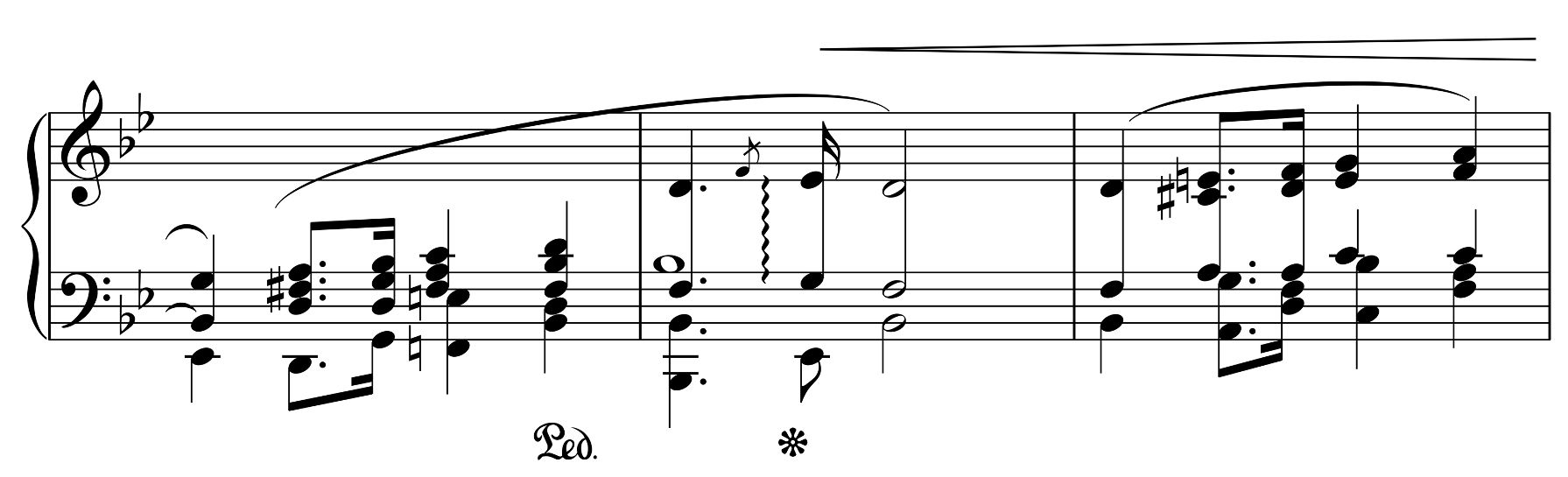
“I prefer to uncross overlapping chords whenever possible.”
Submitted by Michael Clark
Published on 1/1/2020

“Taking the alto notes in the left hand allows the right hand to use stronger fingers on the triplet.”
Submitted by Michael Clark
Published on 1/1/2020

“I take an extra note in the right hand where convenient.”
Submitted by Michael Clark
Published on 1/1/2020

“Taking the alto notes in the left hand allows the right hand to use stronger fingers on the triplet.”
Submitted by Michael Clark
Published on 1/1/2020

“This fingering minimizes position shifts and looks nice.”
Submitted by Michael Clark
Published on 1/1/2020
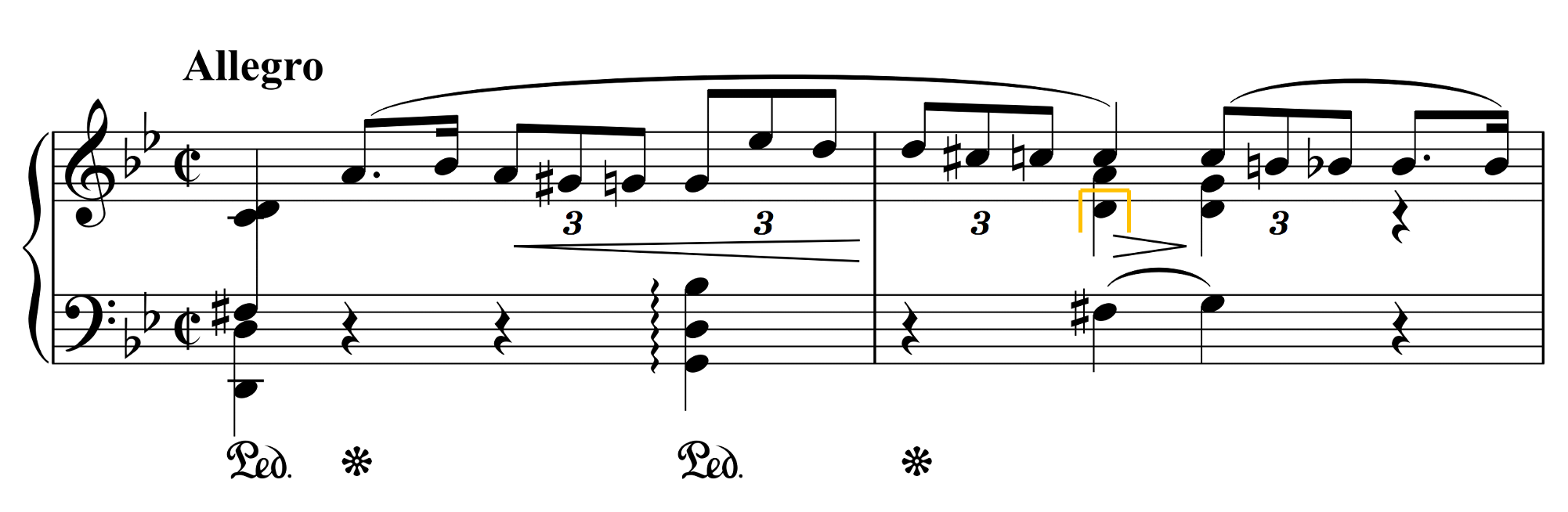
“Taking the D in the left hand eliminates a leap out of the quick triplets.”
Submitted by Michael Clark
Published on 1/1/2020

“I find it easier to start passages like this with an octave in the right hand.”
Submitted by Michael Clark
Published on 1/1/2020

“The left hand is unencumbered with double notes and can assist the right hand.”
Submitted by Michael Clark
Published on 1/1/2020

“No need to stress over these huge leaps when the F-sharps are within easy reach of the left hand. The configuration of the double notes in this passage require a slightly different distribution than earlier in the piece.”
Submitted by Michael Clark
Published on 1/1/2020

“The left hand accompaniment is already plenty wide. I find taking an extra note in the right hand is a relief.”
Submitted by Michael Clark
Published on 1/1/2020

“Dividing the theme between the hands in this way facilitates the sharp accents Copland desires.”
Submitted by Michael Clark
Published on 1/1/2020

“Switching the E to the right hand eliminates a stretched position in the left hand. More compact positions allow a more forceful delivery.”
Submitted by Michael Clark
Published on 1/1/2020

“Taking the A in the left hand helps the right hand hold the tied notes without stretching.”
Submitted by Michael Clark
Published on 1/1/2020

“I prefer to take the A with the left hand, though in the follow measure I play the B and D with the right hand.”
Submitted by Michael Clark
Published on 1/1/2020

“When the top staff has rests, I split the notes on the lower staff between the hands.”
Submitted by Michael Clark
Published on 1/1/2020