Submitted by Brian Marks
Published on 3/8/2023


Submitted by Brian Marks
Published on 3/8/2023

Submitted by Brian Marks
Published on 3/8/2023

Submitted by Brian Marks
Published on 3/8/2023

Submitted by Brian Marks
Published on 3/8/2023

Submitted by Brian Marks
Published on 3/8/2023

Submitted by Brian Marks
Published on 3/8/2023

Submitted by Brian Marks
Published on 3/8/2023

Submitted by Brian Marks
Published on 3/8/2023

Submitted by Brian Marks
Published on 3/8/2023
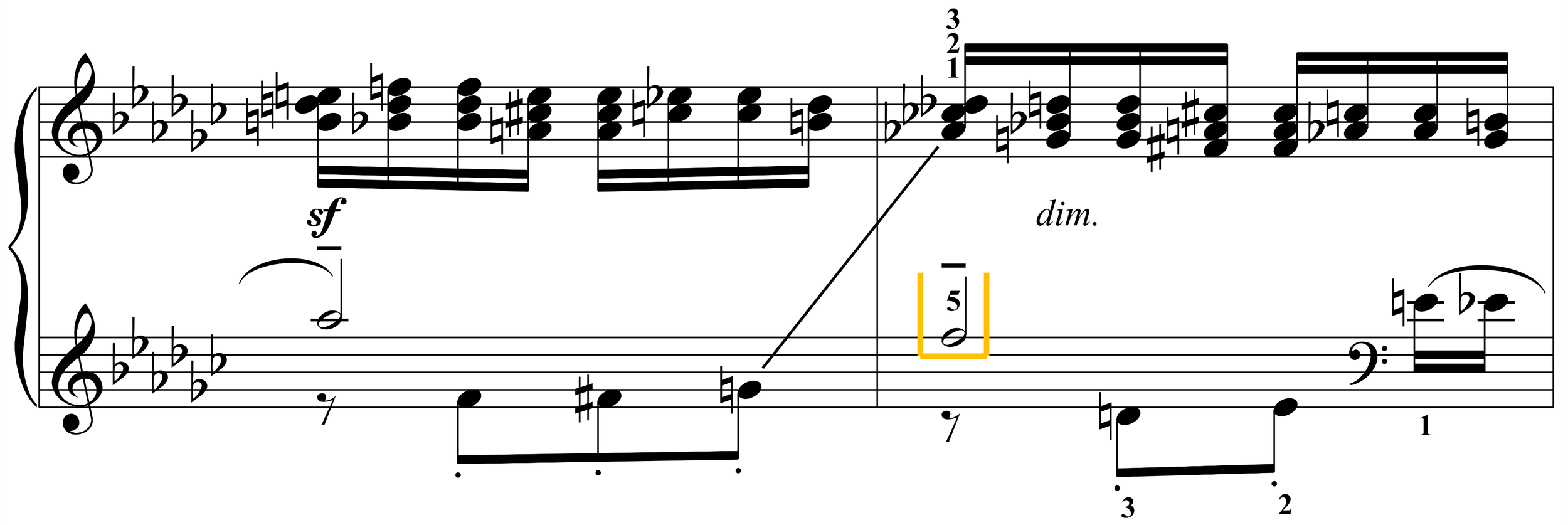
“Taking the F with RH removes the problem of having the LH reach a tenth over the RH staccato chords.”
Submitted by Perry Zou
Published on 1/15/2026
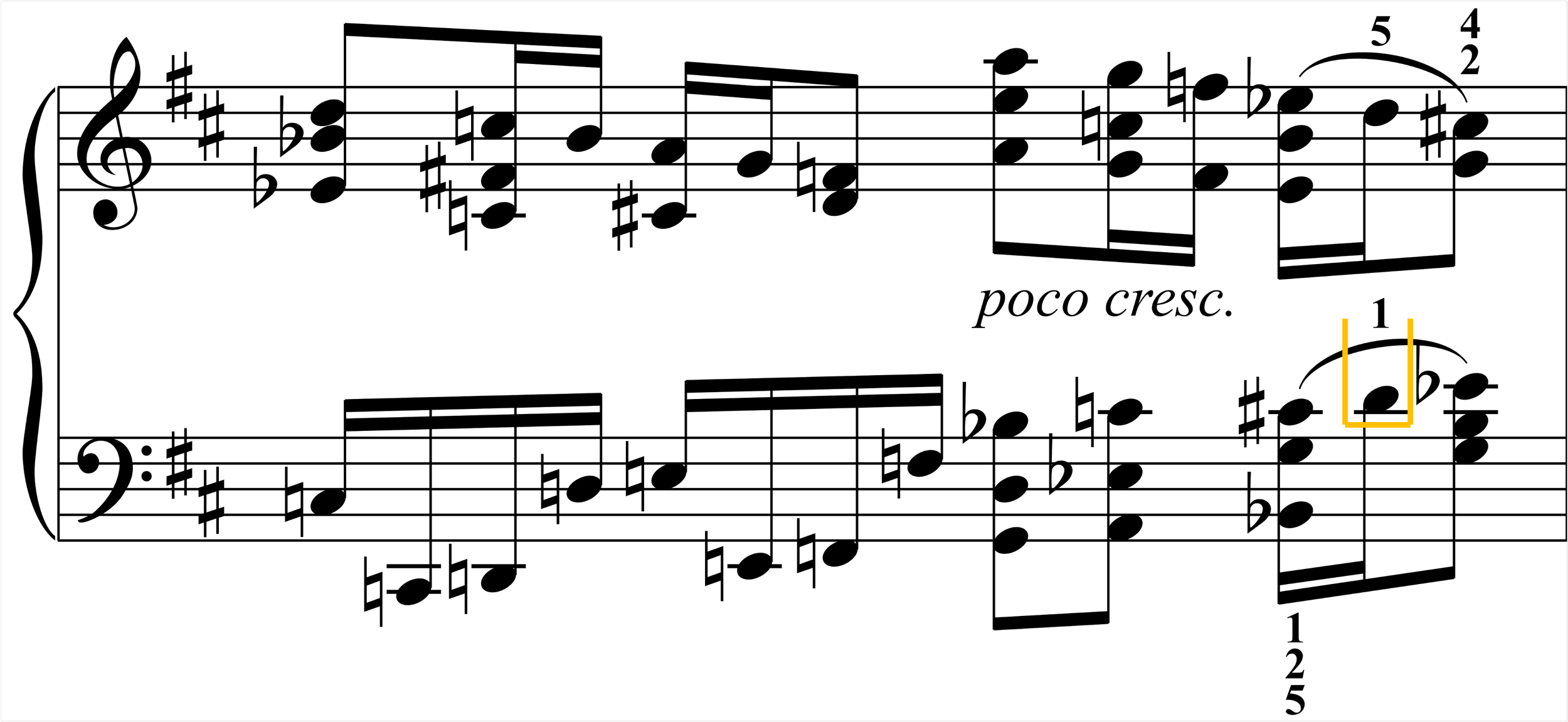
“I find that redistributing this way allows for more security, both for the RH, where the dyad (G-C#) is comfortably in reach, and for the LH, removing an obstacle to playing the chords.”
Submitted by Perry Zou with thanks to Jeffrey Cohen
Published on 1/15/2026
SPECIAL COLLECTION | Dorothy Brandwein’s Ravel Fingerings
Published on 4/4/2022 with the author’s permission
First appeared in Dorothy Woster Brandwein, "Divisi Fingering in Selected Passages from Ravel's Solo Piano Works" (DMA diss., University of Missouri–Kansas City, 1981), 67.

SPECIAL COLLECTION | Dorothy Brandwein’s Ravel Fingerings
Published on 4/5/2022 with the author’s permission
First appeared in Dorothy Woster Brandwein, "Divisi Fingering in Selected Passages from Ravel's Solo Piano Works" (DMA diss., University of Missouri–Kansas City, 1981), 49, 56, 68.
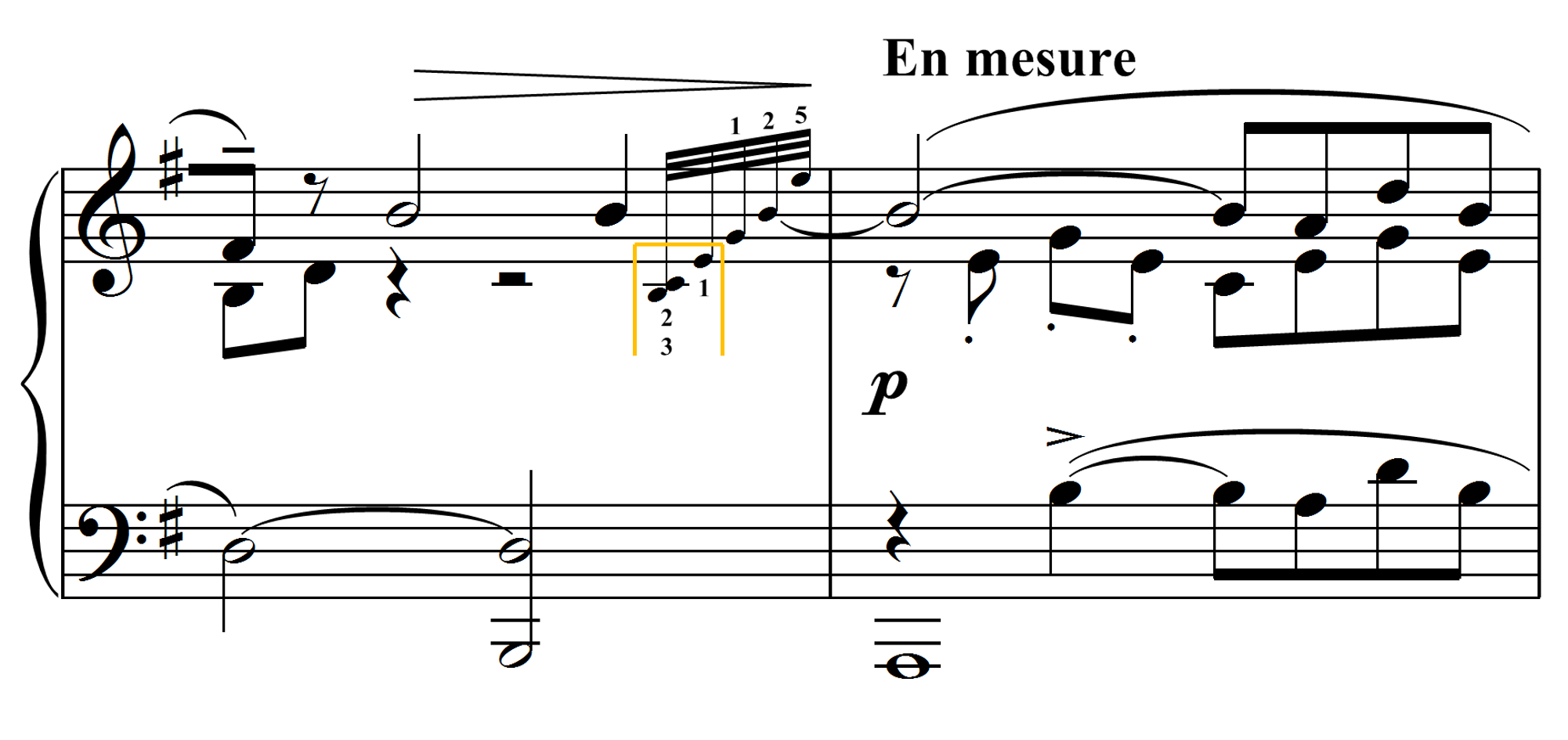
49: “Difficulties arising from the scoring of wide-spaced chords written on the treble staff in two similar passages from the ‘Pavane pour une infante défunte’ can impede the flow of the cantabile melody. If the rolled and blocked chords in the left hand include just one more note written on the upper staff, the right hand is then free to play the melody using the consecutive fingering marked in the example.”
55: “In addition, divisi fingering allows the rapid flourish of notes written in small notation to lie conveniently beneath the hands [m. 34]. Without divisi fingering, the extra arm or wrist motion required to play the notes could be detrimental to the fluidity and speed which the passage require.”
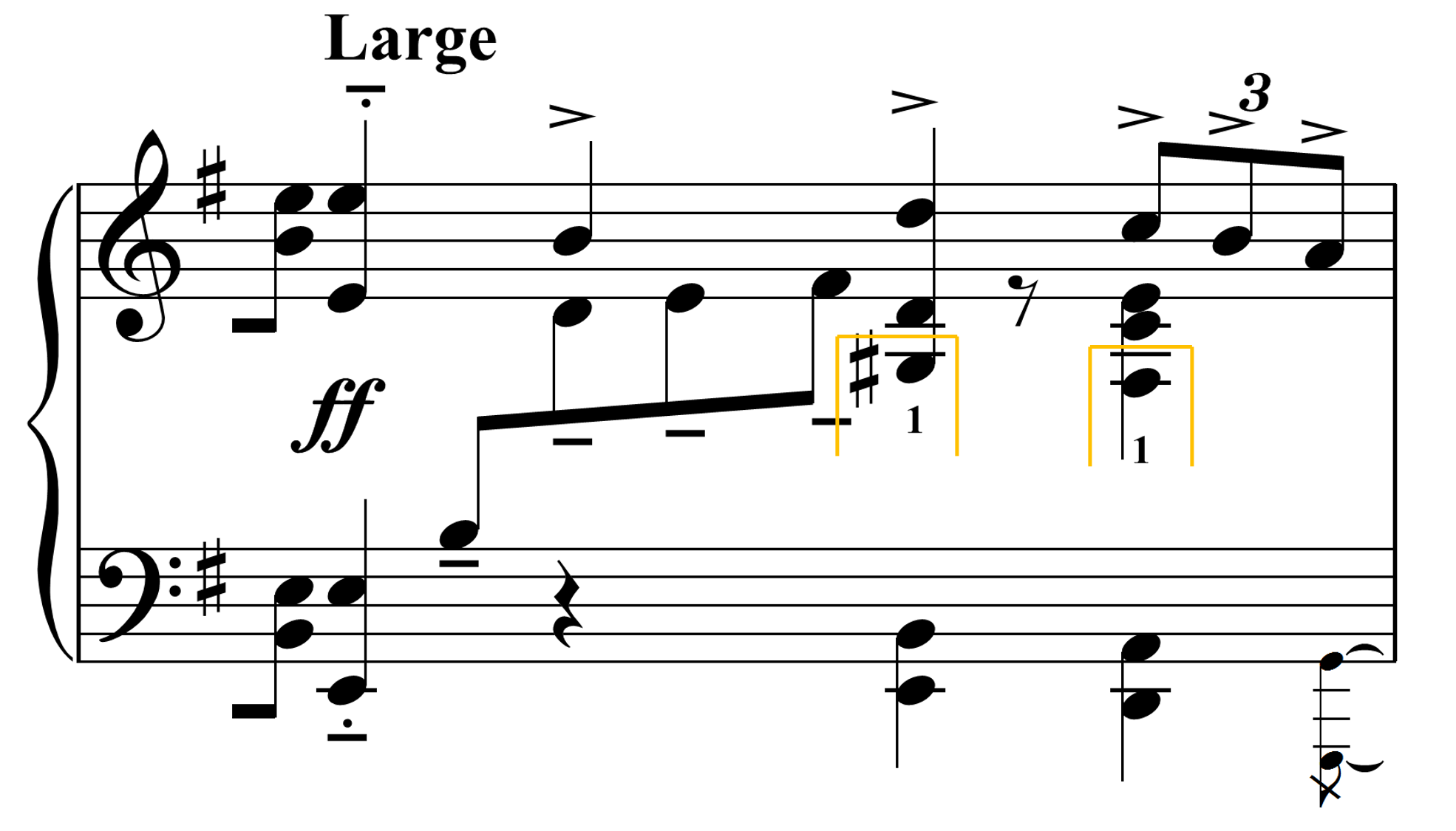
68, fn2: "When using this divisi fingering, the pianist must carefully listen for and bring out the proper voice-leading within the harmonic progression."
SPECIAL COLLECTION | Dorothy Brandwein’s Ravel Fingerings
Published on 4/5/2022 with the author’s permission
First appeared in Dorothy Woster Brandwein, "Divisi Fingering in Selected Passages from Ravel's Solo Piano Works" (DMA diss., University of Missouri–Kansas City, 1981), 68.

SPECIAL COLLECTION | Dorothy Brandwein’s Ravel Fingerings
Published on 4/5/2022 with the author’s permission
First appeared in Dorothy Woster Brandwein, "Divisi Fingering in Selected Passages from Ravel's Solo Piano Works" (DMA diss., University of Missouri–Kansas City, 1981), 68.

SPECIAL COLLECTION | Dorothy Brandwein’s Ravel Fingerings
Published on 4/5/2022 with the author’s permission
First appeared in Dorothy Woster Brandwein, "Divisi Fingering in Selected Passages from Ravel's Solo Piano Works" (DMA diss., University of Missouri–Kansas City, 1981), 68.

SPECIAL COLLECTION | Dorothy Brandwein’s Ravel Fingerings
Published on 4/5/2022 with the author’s permission
First appeared in Dorothy Woster Brandwein, "Divisi Fingering in Selected Passages from Ravel's Solo Piano Works" (DMA diss., University of Missouri–Kansas City, 1981), 49, 69.
49: “Difficulties arising from the scoring of wide-spaced chords written on the treble staff in two similar passages from the ‘Pavane pour une infante defunte’ can impede the flow of the cantabile melody. If the rolled and blocked chords in the left hand include just one more note written on the upper staff, the right hand is then free to play the melody using the consecutive fingering marked in the example.”

SPECIAL COLLECTION | Dorothy Brandwein’s Ravel Fingerings
Published on 4/5/2022 with the author’s permission
First appeared in Dorothy Woster Brandwein, "Divisi Fingering in Selected Passages from Ravel's Solo Piano Works" (DMA diss., University of Missouri–Kansas City, 1981), 56, 69.
56: “In addition, divisi fingering allows the rapid flourish of notes written in small notation to lie conveniently beneath the hands. Without divisi fingering, the extra arm or wrist motion required to play the notes could be detrimental to the fluidity and speed which the passage require.”