Submitted by Perry Zou
Published on 5/21/2025
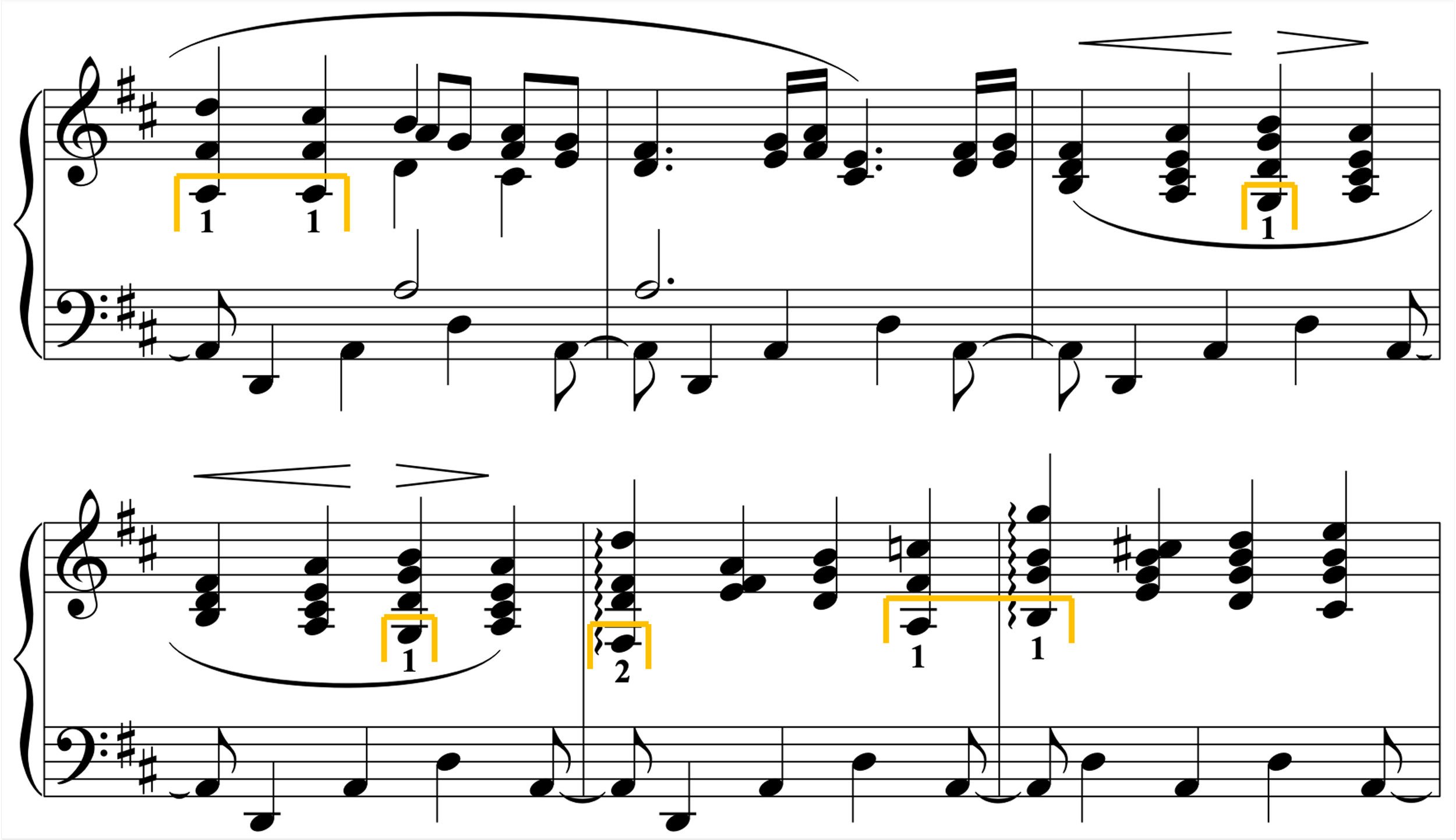
“Redistributing the large chords in the RH to the left to increase accuracy and minimize unnecessary drag in tempo. Can be applied similarly in m. 120-125.”

Submitted by Perry Zou
Published on 5/21/2025
“Redistributing the large chords in the RH to the left to increase accuracy and minimize unnecessary drag in tempo. Can be applied similarly in m. 120-125.”

Submitted by Perry Zou
Published on 5/21/2025
“A very small redistribution for easier execution (voicing the middle line shouldn’t be a problem with the change.”

Submitted by Perry Zhou
Published on 5/20/2025
“The voicing of the middle line towards the end of this Etude proves to be more effective with hand redistribution (and relieves the left hand from all those distances.) Particularly between the 4th and 5th eighth notes of m. 57 where the R.H. is able to hold the A to connect to the G (LH) keeping the line.”

Submitted by Perry Zhou
Published on 5/25/2025
“This was one of the pesky sections of the final etude of Op. 33; here are my ideal fingerings. Notice in the first beat unlike the right hand, which utilizes the distance between the 1st and 2nd fingers for easier grouping (5-4-3-2), the LH has to make do with (1-2-3-1) since the 4th and 5th fingers don’t have the distance.”
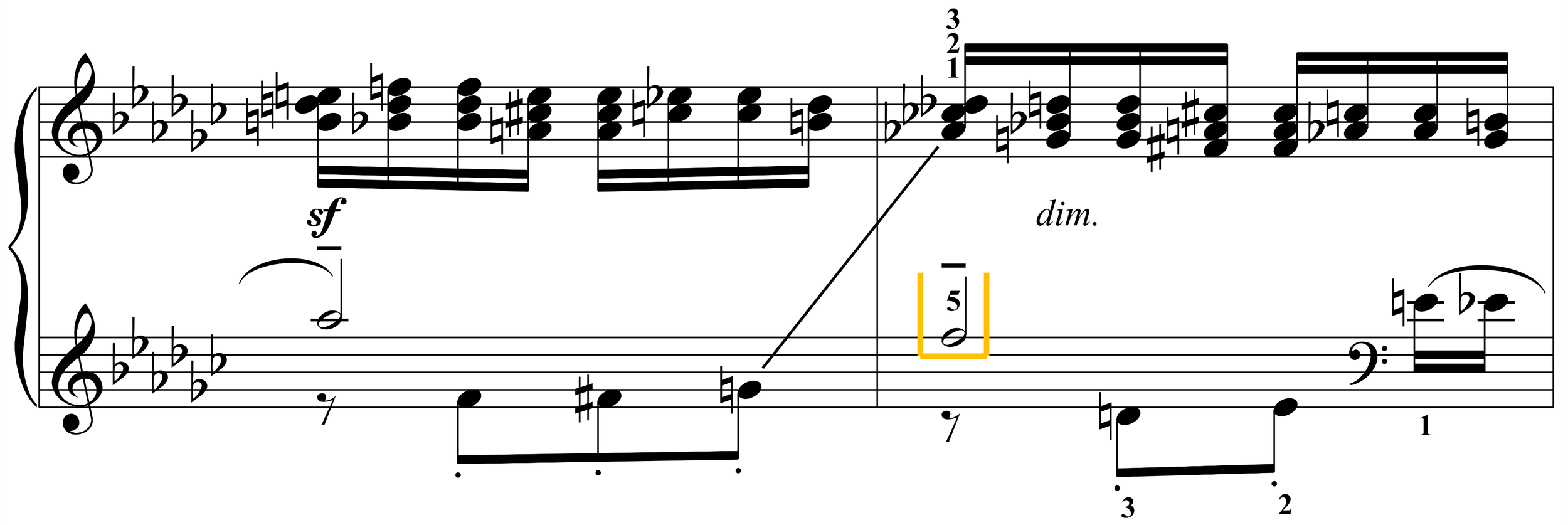
“Taking the F with RH removes the problem of having the LH reach a tenth over the RH staccato chords.”
Submitted by Perry Zou
Published on 1/15/2026
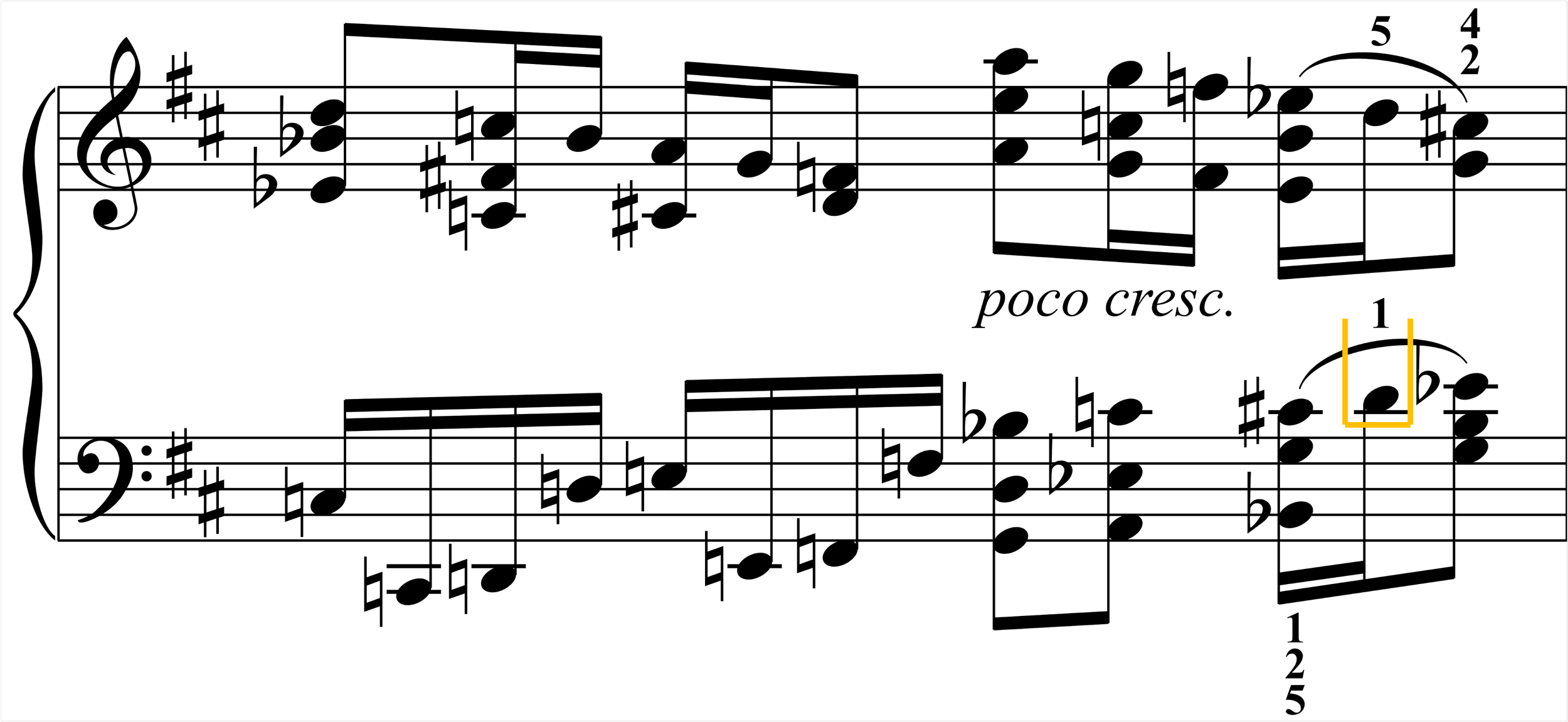
“I find that redistributing this way allows for more security, both for the RH, where the dyad (G-C#) is comfortably in reach, and for the LH, removing an obstacle to playing the chords.”
Submitted by Perry Zou with thanks to Jeffrey Cohen
Published on 1/15/2026