“Starting the scale with a left-hand octave is more secure.”
Submitted by Michael Clark
Published on 1/1/2020


“Starting the scale with a left-hand octave is more secure.”
Submitted by Michael Clark
Published on 1/1/2020

“Transferring the scale to the right hand a little early allows the left hand to prepare for the chord.”
Submitted by Michael Clark
Published on 8/4/2021

“I find this distribution mentally more secure because my left-hand thumb consistently returns to D.”
Submitted by Michael Clark
Published on 1/1/2020

Submitted by Michael Lenahan
Published on 5/1/2020

Submitted by Michael Lenahan
Published on 5/1/2020

Submitted by Michael Lenahan
Published on 5/1/2020
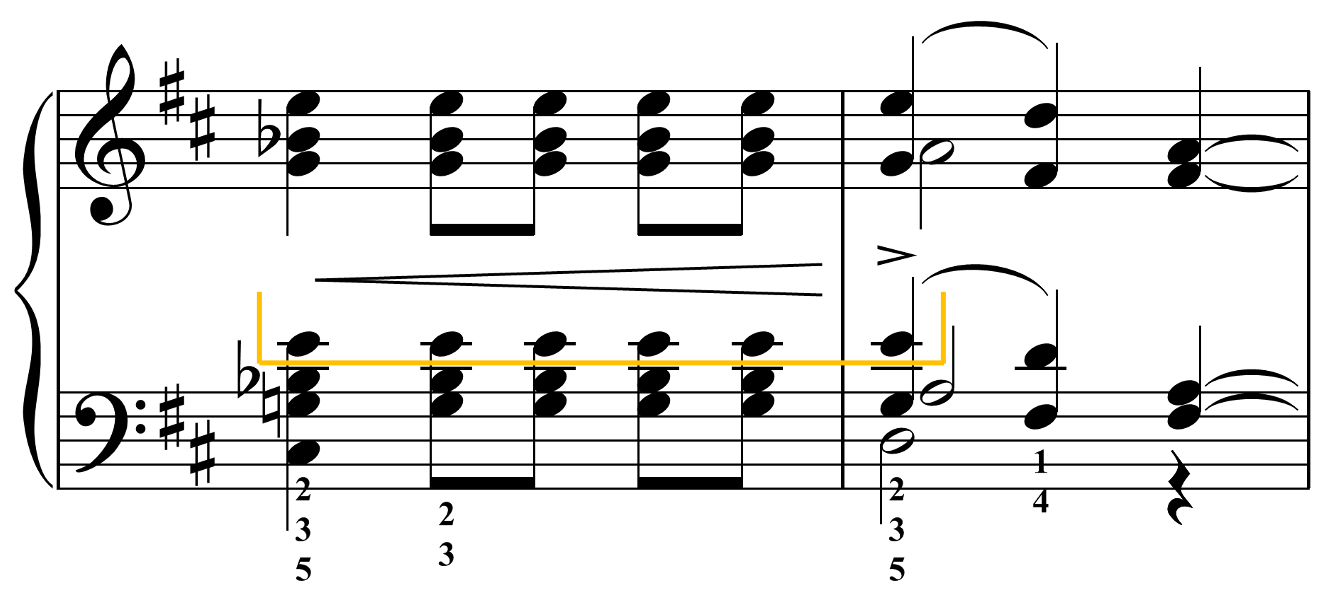
Submitted by Michael Lenahan
Published on 5/1/2020

Submitted by Michael Lenahan
Published on 5/1/2020

Submitted by Michael Lenahan
Published on 5/1/2020

Submitted by Michael Lenahan
Published on 5/1/2020

Submitted by Michael Lenahan
Published on 5/1/2020
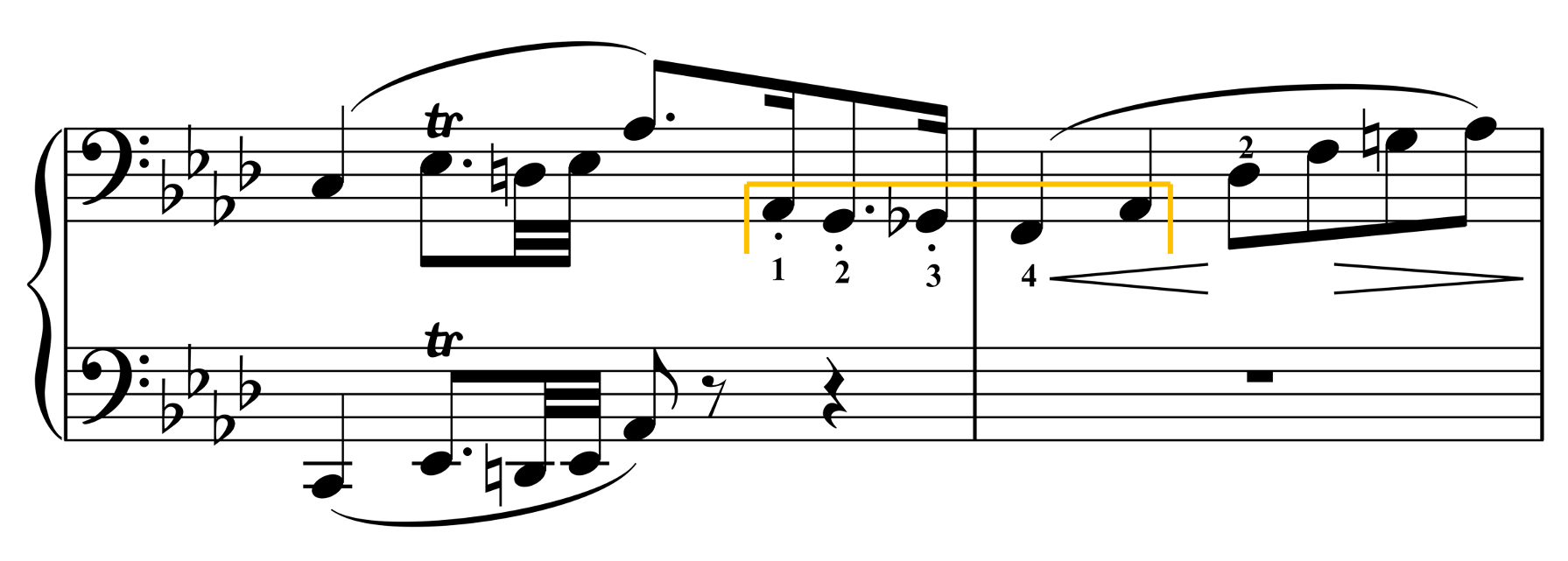
“The left hand is already in this register, and using two hands avoids a position shift in the right hand.”
Submitted by Michael Clark
Published on 1/1/2020

“The left hand can assist in a secure ending to the trill.”
Submitted by Michael Clark
Published on 1/1/2020
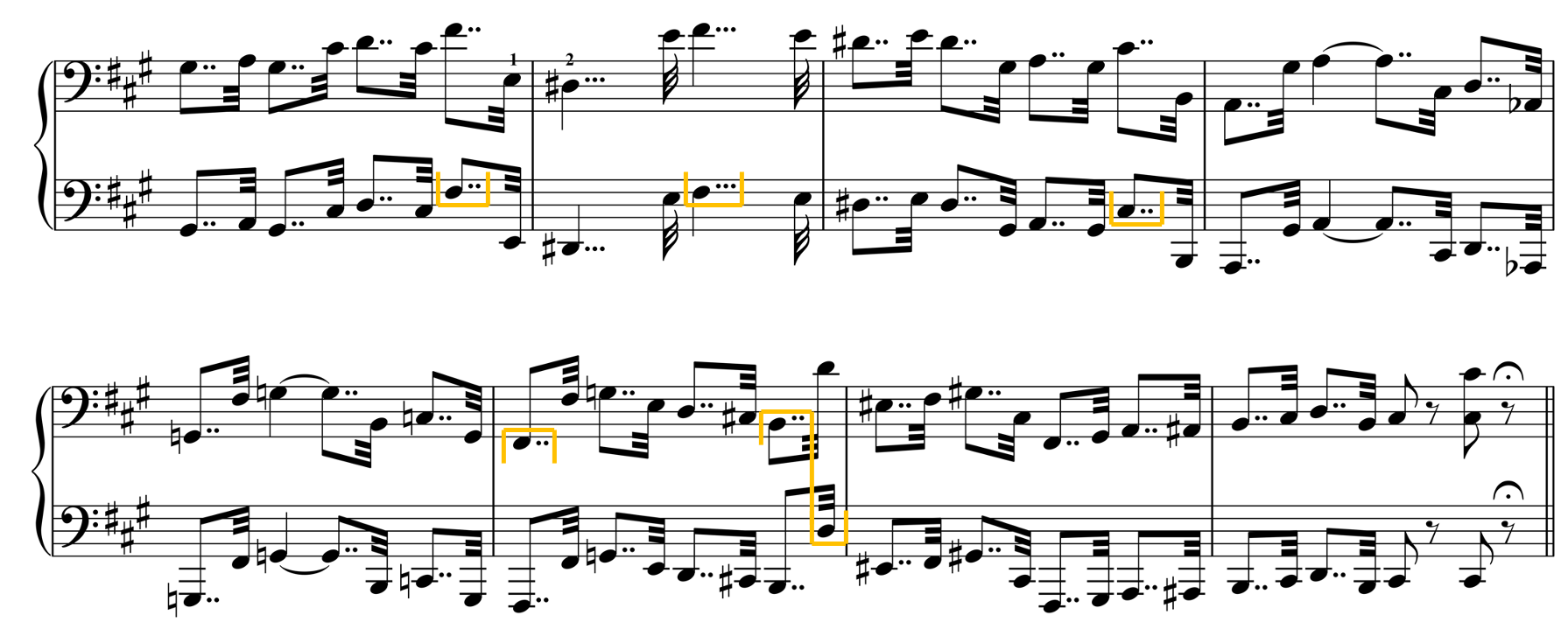
“Take some of the highest and lowest notes as octaves reduces the number of position shifts.”
Submitted by Michael Clark
Published on 1/1/2020

“This fingering avoids finger crossing and uncomfortable stretches.”
Submitted by Michael Clark
Published on 1/1/2020

“I find it awkward to reach with the left-hand thumb to play the last three notes, and the right hand is already on the note.”
Submitted by Michael Clark
Published on 1/1/2020
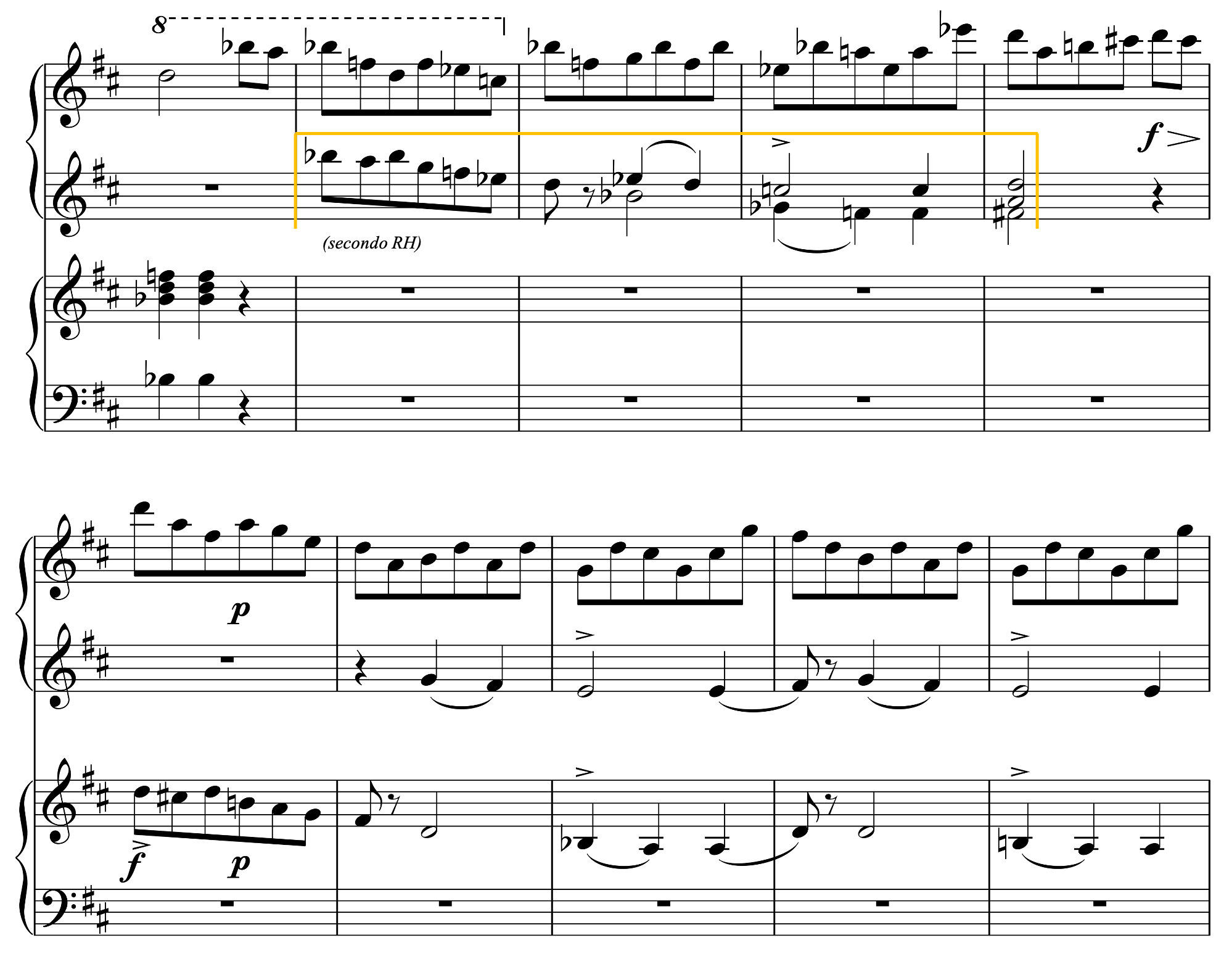
“If the primo performer is struggling at all with this passage, it can be shared with the other player.”
Submitted by Michael Clark
Published on 1/1/2020

“Taking the low A as an octave allows the right hand to continue on stronger fingers without an awkward leap.”
Submitted by Michael Clark
Published on 1/1/2020