“Taking the C in m. 38 in left hand eliminates a position shift at the start of that measure and gives more time for the leap to the higher register.”
Submitted by Michael Clark
Published on 4/4/2020


“Taking the C in m. 38 in left hand eliminates a position shift at the start of that measure and gives more time for the leap to the higher register.”
Submitted by Michael Clark
Published on 4/4/2020

“The lower D in the treble staff in m. 55 can be played with the left-hand chord, eliminating a position shift in the right hand.”
Submitted by Michael Clark
Published on 4/4/2020

“Taking these extra notes in the left hand makes the right-hand register change easy.”
Submitted by Michael Clark
Published on 1/6/2020
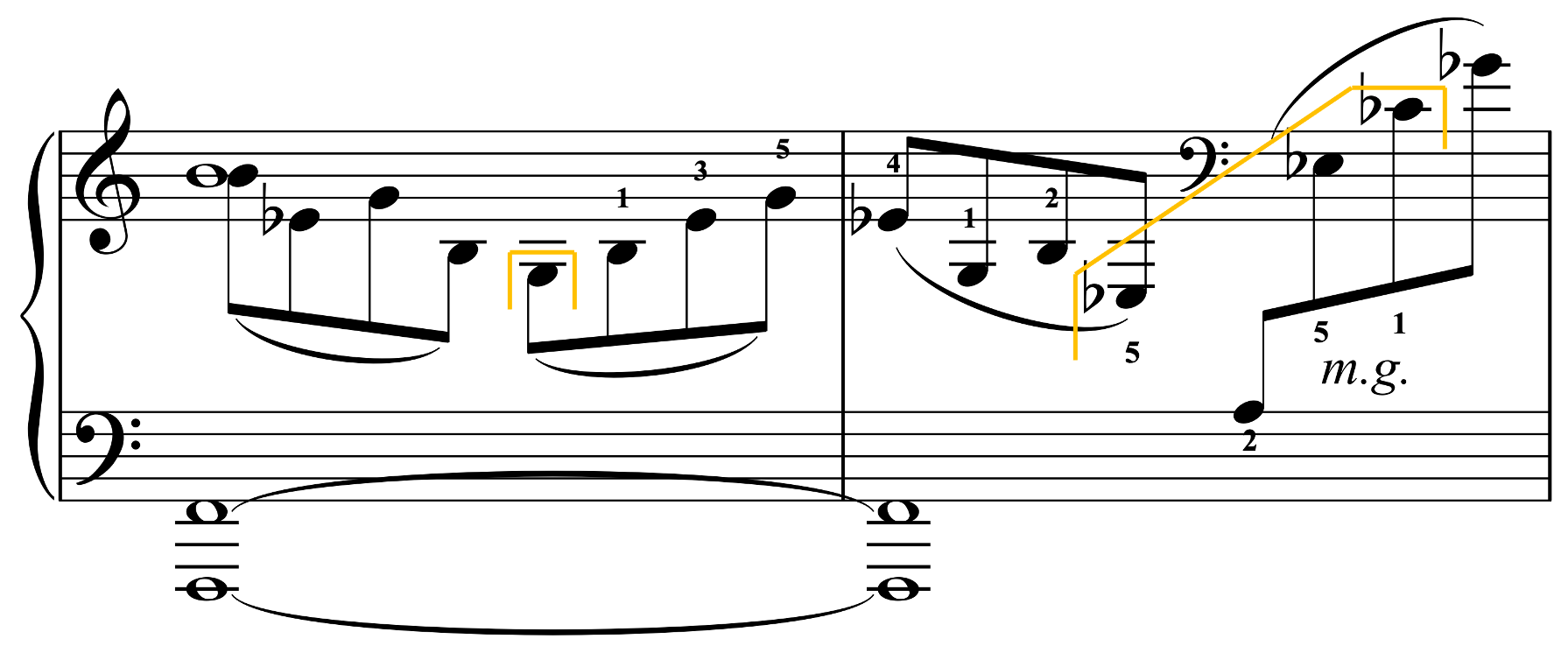
“This fingering is designed to eliminate unnecessary positions shifts and divide the notes between the hands as evenly as possible.”
Submitted by Michael Clark
Published on 1/6/2020

“This fingering lightens the burden on the right hand and provides more security at a break-neck pace.”
Submitted by Michael Clark
Published on 4/4/2020

“This fingering uncrosses the hands and eliminates a leap in the left hand.”
Submitted by Michael Clark
Published on 1/6/2020

“This fingering eliminates a position shift.”
Submitted by Michael Clark
Published on 4/4/2020

“Taking the F in the left hand frees the right hand to change register more easily.”
Submitted by Michael Clark
Published on 4/4/2020

“I can play these octaves more legato with two hands.”
Submitted by Michael Clark
Published on 1/6/2020
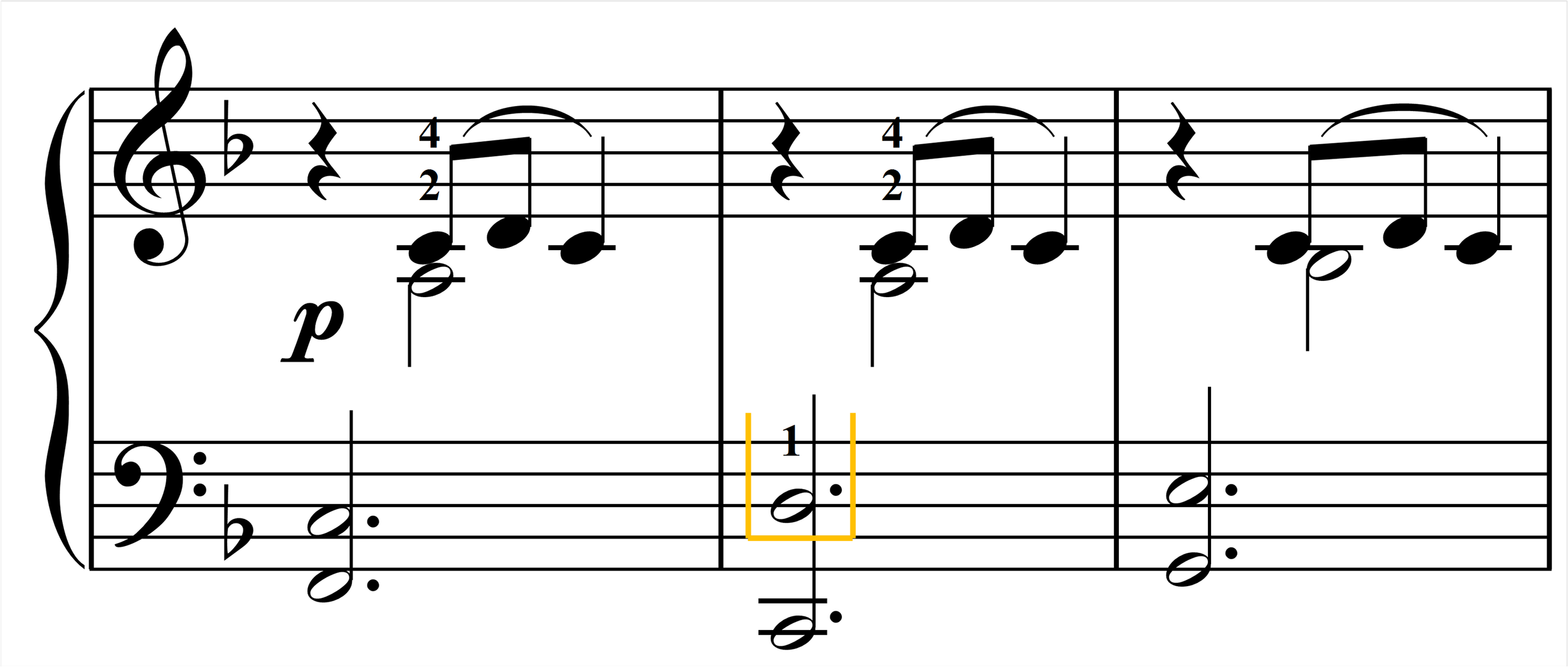
“Taking the tenor D with the right-hand thumb in m. 34 helps me voice that line and maintain legato without pedal, which in turn facilitates a short articulation for end of the right-hand slur.”
Submitted by Michael Clark
Published on 1/5/2024

“Taking the tenor D with the right-hand thumb in m. 50 helps me voice that line and maintain legato without pedal, which in turn facilitates a short articulation for end of the right-hand slur.”
Submitted by Michael Clark
Published on 1/5/2024

“This fingering helps me highlight the accented melody with stronger fingers.”
Submitted by Michael Clark
Published on 1/5/2024
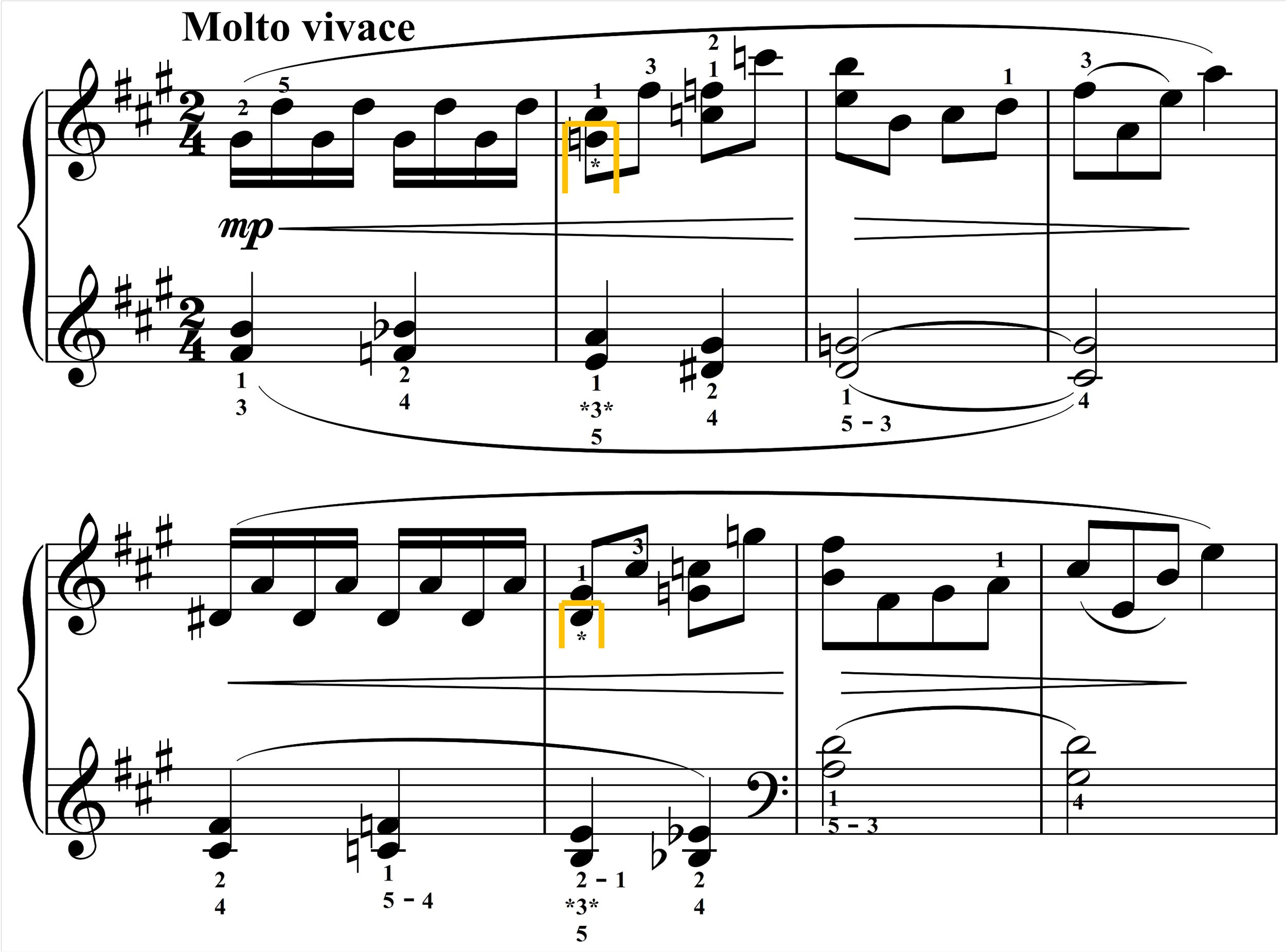
“I begin this piece with the right hand above the left hand. Taking the G-natural in m. 2 into the left hand eliminates the need to reverse the hands and better prepares the right hand for the next position.”
Submitted by Michael Clark
Published on 10/14/2023

“Taking these two melody notes in the left hand allows the right hand more time to prepare for its next position.”
Submitted by Michael Clark
Published on 1/5/2024

“The F-sharp can be easily played by the right hand to avoid a roll or stretch.”
Submitted by Michael Clark
Published on 10/14/2023

“Taking the F-sharp in the left-hand facilitates a legato connection while sustaining the half notes.”
Submitted by Michael Clark
Published on 10/14/2023
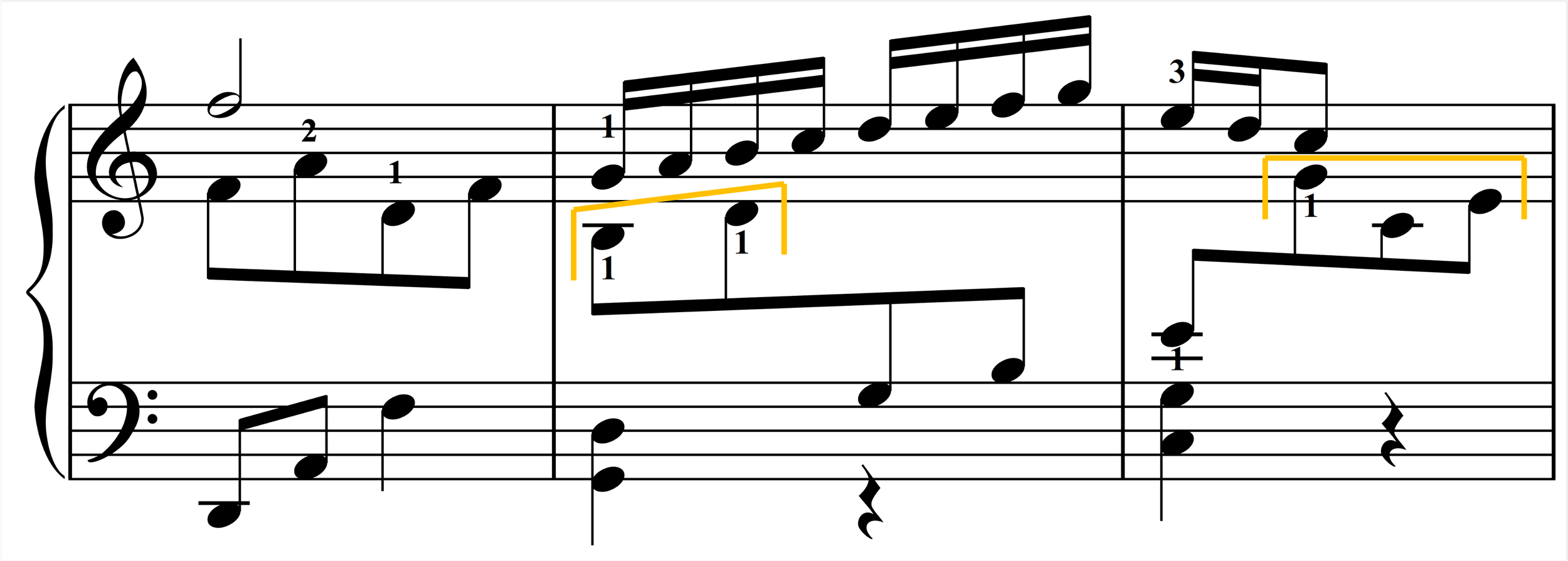
“I find it easier to play the scale unencumbered by the alto notes. I play those in the left hand by quickly rolling the chord rather .”
Submitted by Michael Clark
Published on 9/2/2023

“These two notes can be played with the right hand to avoid the need to arpeggiate or stretch in the left hand.”
Submitted by Michael Clark
Published on 9/2/2023